LOV MEMBER
People working@LOV
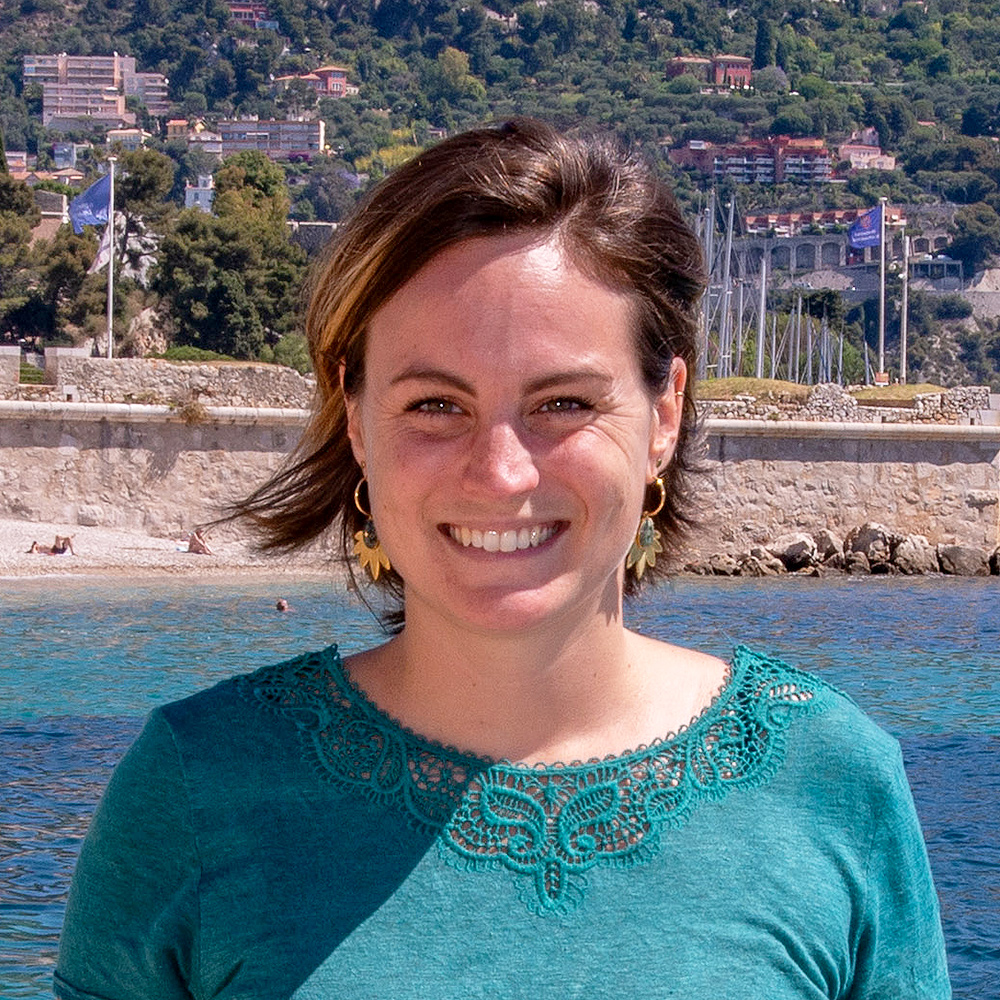
Raphaelle Sauzede

CONTACT : Raphaëlle Sauzède

Laboratoire d'Océanographie de Villefranche, LOV
Institut de la Mer de Villefranche, IMEV
181 Chemin du Lazaret
06230 Villefranche-sur-Mer (France)

Research engineer

@ IMEV STAFF WORKING CLOSELY WITH A LOV TEAM - OMTAB

Raphaëlle Sauzède

Current position :

2019-present: Research Engineer

Status :

Permanent

Employer :

CNRS

Team(s) :

IMEV STAFF WORKING CLOSELY WITH A LOV TEAM

Hosting Lab :

IMEV (FR 3761)

Keywords :

phytoplankton communities, chlorophyll fluorescence, ocean color, bgc-argo floats, neural networks

Complementary Information

2012: M. Sc. in Physical, Chemical and Biogeochemical Oceanography, Specialization in coupled models, Université Aix-Marseille, France

Facilities

PUBLICATIONS BY

Raphaëlle Sauzède

54 documents 🔗 HAL Profile
  • Elsa Simon, Léo Lacour, Hervé Claustre, Nicholas Bock, Marin Cornec, Raphaëlle Sauzède, Catherine Schmechtig, Laurent Coppola. Global Biogeochemical Cycles (2025). ART
    Abstract

    Abstract Understanding factors controlling the biological carbon pump (BCP) at the regional scale is of major interest for better characterizing carbon sequestration into the deep ocean and, therefore, the ocean's role in climate regulation. This study focuses on high‐latitude marine regions, which are responsible for the majority of marine CO2 absorption. Using data from Biogeochemical‐Argo floats, a bioregionalization method was performed on 335 annual time series of chlorophyll a concentration and particulate backscattering coefficient, variables from which particulate organic carbon (POC) could be estimated. This analysis highlighted six regimes characterized by distinct seasonality in productivity, export, and transfer of small POC (<100 μm). Both hemispheres exhibited regimes with strong summer blooms and others with deep chlorophyll maxima. Across these regimes, variations in phytoplankton phenology and particle assemblages drove three distinct systems of BCP strength and efficiency for small particles. Despite these differences, processes such as gravitational sinking, the mixed layer pump, or particle fragmentation facilitated the export of small particles down to ∼1,000 m across all regions. This resulted in an average annual contribution of ∼10% of small particles to total organic carbon fluxes at depth, highlighting the role of small particles in long‐term carbon sequestration. These findings emphasize the need for future investigations into processes driving small‐particle carbon export and transfer in the mesopelagic zone at annual and seasonal scales.

  • Cristhian Asto, Anthony Bosse, Alice Pietri, Raphaëlle Sauzède, Michelle Graco, Dimitri Gutiérrez, François Colas. Frontiers in Marine Science (2025). ART
    Abstract

    This study presents a regionally trained version of the “CArbonate system and Nutrients concentration from hYdrological properties and Oxygen using a Neural network” (CANYON) method, named CANYON-PU, for estimating primary macronutrients (phosphates, silicates, and nitrates) in the Peruvian Upwelling System (PUS). Using a neural network approach, the model was trained using extensive biogeochemical data spanning between 2003 and 2021, collected by the Peruvian Institute of Marine Research (IMARPE). Variables representing the low-frequency variability related to ENSO were introduced in the training and significantly improved the performance of the algorithm. The performance of CANYON-PU was validated against independent datasets and demonstrated an improvement in accuracy over the global CANYON model that struggled to represent the nutrient distribution in the PUS mainly due to the lack of samples in its training. Therefore, CANYON-PU successfully captured nutrient variability across different spatial and temporal scales, showcasing its applicability to diverse datasets, including high-frequency data such as profiling floats or gliders. This work highlights the effectiveness of neural networks for representing the nutrient distribution within highly variable ecosystems like the PUS.

  • Catherine Schmechtig, Marie Boichu, Thierry Carval, Delphine Dobler, Raphael Grandin, Theo Mathurin, Nicolas Pascal, Virginie Racapé, Catalina Reyes, Raphaelle Sauzede, Reiner Schlitzer. EGU General Assembly 2025 (2025). COMM
    Abstract

    Under the umbrella of the EOSC ecosystem, the FAIR-EASE project funded under HORIZON-INFRA-2021-EOSC-01-04 aims to facilitate access to interoperable data and services for earth and environmental multi-disciplinary use cases, demonstrating the capabilities to support open science (https://fairease.eu/). Based on three of its pilots more specifically: the Volcano Space Observatory pilot, the Ocean Biogeochemical Observations pilot and the Coastal Dynamic pilot, the FAIR-EASE partners would like to highlight both the synergy and the new emerging interdisciplinary collaborations and progresses that can be achieved in the framework of such a European project promoting FAIR principles. Indeed,* The Volcano Space Observatory Pilot supports the implementation of innovative web services (notably here the open access VOLCPLUME web platform) displaying a broad range of satellite and ground-based data relevant to the characterization of volcanic gas and particle properties for the near real-time monitoring of volcanic activity and atmospheric hazards.* The Ocean Biogeochemical (BGC) Observations aims to provide a common QA/QC (Quality Assessment /Quality Control) platform to the whole BGC community to enhance the BGC data quality and address fundamental scientific questions. * The webODV software, part of the Coastal Water Dynamic pilot tools, allows to display and superimpose very heterogeneous datasets (i.e. satellite surface data vs. in situ profiles data, climatology vs. in situ profiles data, observations vs. model simulations in general).Taking as a starting point, the eruption of the Hunga Tonga-Hunga Ha’apai volcano on January 15, 2022, and the availability of various satellite observations of volcanic plumes and ocean surface properties together with in situ Argo (Argo is an international program that collects information from inside the ocean using a fleet of robotic instruments that drift with the ocean currents) floats measuring BGC variables such as the chlorophyll-a and suspended particles in the eruption area, FAIR-EASE partners aim to investigate the potential impacts of such a major stratospheric eruptions a record breaking eruption in the satellite era, on the marine ecosystem. Volcano and BGC community expertise as well as tools developed and pooled on Galaxy Europe platform (Galaxy is an open-source Virtual Research Environment) during the FAIR-EASE project support scientists in their investigation.

  • Julia Uitz, Raphaëlle Sauzède, Louis Terrats, Renosh PANNIMPULLATH REMANAN, J. Ras, Céline Dimier, Catherine Schmechtig, Hervé Claustre. Ocean Science Meeting (2024). COMM
    Abstract

    Phytoplankton community composition significantly influences important biogeochemical processes, particularly the biological carbon pump. Assessing the global distribution and dynamics of main phytoplankton groups is therefore of the utmost importance. Taking advantage of the synoptic view of satellite ocean color and altimetry observations combined with vertically-resolved proles of chlorophyll fluorescence collected by the global BioGeoChemical-Argo (BGC-Argo) fleet, we previously developed a neural network-based approach to infer a global tridimensional (3D) gridded product of chlorophyll a (Chla), i.e. the SOCA-Chla method. Expanding upon SOCA-Chla, we introduce SOCA-PFT, a novel method for deriving a global 3D product of phytoplankton functional types (PFT). SOCA-PFT follows the same principle as SOCA-Chla but requires an initial step to enrich the training BGC-Argo database with the PFT information that would not otherwise be available. This step involves developing a neural network trained on a large-scale database of concurrent shipborne measurements of vertical proles of pigments determined by High Performance Liquid Chromatography (HPLC), fluorescence and temperature/salinity (T/S). Applied to the BGC-Argo database, this intermediate method yields a PFT-enriched BGC-Argo database, which is further matched up with satellite observations to train the SOCA-PFT method. The resulting global PFT product provides depth-resolved Chla associated with pico-, nano-, and microphytoplankton as well as concentrations of pigment biomarkers representing major phytoplankton groups. This new product is expected to be useful for various applications, from understanding the response of phytoplankton communities to environmental conditions, to improving the quantification of biogeochemical budgets or validating biogeochemical models that explicitly incorporate multiple phytoplankton groups.

  • Clément Bazantay, Olivier Jourdan, Guillaume Mioche, Julia Uitz, Aymeric Dziduch, Julien Delanoë, Quitterie Cazenave, Raphaëlle Sauzède, Alain Protat, Karine Sellegri. Geophysical Research Letters (2024). ART
    Abstract

    There is growing evidence that marine microorganisms may influence cloud cover over the ocean through their impact on sea spray and trace gas emissions, further forming cloud droplets or ice crystals. However, evidence of a robust causal relationship based on observations is still pending. In this study, we use 4 years of multi‐instrument satellite data to segregate low‐level clouds into ice‐containing and liquid‐water clouds to obtain clear relationships between cloud types and ocean biological tracers, especially with nanophytoplankton cell abundances. Results suggest that microorganisms may be involved in compensating effects on cloud properties, increasing the frequency of occurrence of warm‐liquid clouds, and decreasing the occurrence of ice‐containing clouds in most regions during springtime. The relationships observed in most regions do not apply to the South Pacific Ocean in the 40°S–50°S latitude band. These results shed light on overlooked potential compensating effects of ocean microorganisms on cloud cover.

  • Élodie Martinez, Thomas Gorgues, Matthieu Lengaigne, Raphaëlle Sauzède, Christophe E. Menkès, Julia Uitz, Emanuele Di Lorenzo, Ronan Fablet. Frontiers in Marine Science (2024). OTHER
  • Chunxue Yang, Romain Bourdallé-Badie, Marie Drevillon, Dillon Amaya, Lotfi Aouf, Ali Aydogdu, Benjamin Barton, Mike Bell, Tim Boyer, Anouk Blauw, James Carton, Tony Candela, Gianpiero Cossarini, Tomasz Dabrowski, Eric de Boisseson, Lee de Mora, Ronan Fablet, Gaël Forget, Yosuke Fujii, Gilles Garric, Valentina Giunta, Peter Salamon, Hans Hersbach, Mélanie Juza, Julien Le Sommer, Matthew Martin, Ronan Mcadam, Melisa Menendez Garcia, Joao Morim, Dario Nicolì, Antonio Reppucci, Annette Samuelsen, Raphaëlle Sauzède, Laura Slivinski, Damien Specq, Andrea Storto, Laura Tuomi, Luc Vandenbulcke, Roland Aznar, Jonathan Beuvier, Andrea Cipollone, Emanuela Clementi, Valeria Di Biagio, Romain Escudier, Rianne Giesen, Eric Greiner, Karen Guihou, Vasily Korabel, Julien Lamouroux, Stephane Law Chune, Jean- Michel Lellouche, Bruno Levier, Leonardo Lima, Antoine Mangin, Michael Mayer, Angelique Melet, Pietro Miraglio, Charikleia Oikonomou, Julia Pfeffer, Richard Renshaw, Ida Ringgaard, Sulian Thual, Olivier Titaud, Marina Tonani, Simon van Gennip, Karina von Schuckmann, Yann Drillet, Pierre-Yves Le Traon. Bulletin of the American Meteorological Society (2024). ART
  • Pannimpullath Remanan Renosh, Raphaëlle Sauzède, Hervé Claustre. EGU General Assembly 2023 (2023). COMM
    Abstract

    <p>To better understand the global ocean biogeochemical processes, it is crucial to strengthen the spatial coverage of high-quality biogeochemical variables. In this context, we provide high-quality nutrients (nitrate, phosphate and silicate) and carbonate system variables (total alkalinity, dissolved inorganic carbon, pH and partial pressure of carbon dioxide) profiles for BGC-Argo floats equipped with oxygen sensors and data qualified in delayed mode. These variables are derived using neural network models called CANYON-B and CONTENT for nutrients and carbonate system variables, respectively. For the Mediterranean Sea, we deliver these variables from a regional dedicated model called CANYON-MED. These variables are distributed from September 2002 to August 2022 as part of CMEMS MOBTAC service. The last update of the product will be available in CMEMS portal from March 2023.</p> <p>At the global scale, nitrate, phosphate and silicate are retrieved with an accuracy (from the root mean squared difference) of 0.68, 0.051, 2.3 µmol kg<sup>-1</sup><sub>,</sub> respectively<sup> </sup>and the carbonate system variables, i.e., total alkalinity, dissolved inorganic carbon, pH and partial pressure of carbon dioxide are retrieved with an accuracy of 6.2 µmol kg<sup>-1</sup>, 6.9 µmol kg<sup>-1</sup>, 0.013 (unitless), and 15 µatm, respectively. The global models (CANYON-B and CONTENT) have also been validated with independent data collected from recent various oceanic cruises not used for the development of the methods (from GLODAPv2.2021 database) and the Hawaii Ocean Time series (HOT). These independent validations demonstrate the validity of these models for global ocean applications. The nitrate and pH products were again validated against measured nitrate and pH from BGC-Argo floats equipped with oxygen sensors. Overall validation results were quite satisfactory at global and regional spatial scales.</p> <p>Currently, the profiles are available for BGC-Argo floats with concurrent profiles of temperature, salinity and oxygen qualified in delayed mode. This product will be also available from near real-time observations from 2024.</p>

  • Peter Rubbens, Stephanie Brodie, Tristan Cordier, Diogo Destro Barcellos, Paul Devos, Jose A Fernandes-Salvador, Jennifer I Fincham, Alessandra Gomes, Nils Olav Handegard, Kerry Howell, Cédric Jamet, Kyrre Heldal Kartveit, Hassan Moustahfid, Clea Parcerisas, Dimitris Politikos, Raphaëlle Sauzède, Maria Sokolova, Laura Uusitalo, Laure van den Bulcke, Aloysius T M van Helmond, Jordan T Watson, Heather Welch, Oscar Beltran-Perez, Samuel Chaffron, David S Greenberg, Bernhard Kühn, Rainer Kiko, Madiop Lo, Rubens M Lopes, Klas Ove Möller, William Michaels, Ahmet Pala, Jean-Baptiste Romagnan, Pia Schuchert, Vahid Seydi, Sebastian Villasante, Ketil Malde, Jean-Olivier Irisson. ICES Journal of Marine Science (2023). ART
    Abstract

    Machine learning covers a large set of algorithms that can be trained to identify patterns in data. Thanks to the increase in the amount of data and computing power available, it has become pervasive across scientific disciplines. We first highlight why machine learning is needed in marine ecology. Then we provide a quick primer on machine learning techniques and vocabulary. We built a database of ∼1000 publications that implement such techniques to analyse marine ecology data. For various data types (images, optical spectra, acoustics, omics, geolocations, biogeochemical profiles, and satellite imagery), we present a historical perspective on applications that proved influential, can serve as templates for new work, or represent the diversity of approaches. Then, we illustrate how machine learning can be used to better understand ecological systems, by combining various sources of marine data. Through this coverage of the literature, we demonstrate an increase in the proportion of marine ecology studies that use machine learning, the pervasiveness of images as a data source, the dominance of machine learning for classification-type problems, and a shift towards deep learning for all data types. This overview is meant to guide researchers who wish to apply machine learning methods to their marine datasets.

  • Alexandre Mignot, Hervé Claustre, Gianpiero Cossarini, Fabrizio d'Ortenzio, Elodie Gutknecht, Julien Lamouroux, Paolo Lazzari, Coralie Perruche, Stefano Salon, Raphaëlle Sauzède, Vincent Taillandier, Anna Teruzzi. Biogeosciences (2023). ART
    Abstract

    Abstract. Numerical models of ocean biogeochemistry are becoming the major tools used to detect and predict the impact of climate change on marine resources and to monitor ocean health. However, with the continuous improvement of model structure and spatial resolution, incorporation of these additional degrees of freedom into fidelity assessment has become increasingly challenging. Here, we propose a new method to provide information on the model predictive skill in a concise way. The method is based on the conjoint use of a k-means clustering technique, assessment metrics, and Biogeochemical-Argo (BGC-Argo) observations. The k-means algorithm and the assessment metrics reduce the number of model data points to be evaluated. The metrics evaluate either the model state accuracy or the skill of the model with respect to capturing emergent properties, such as the deep chlorophyll maximums and oxygen minimum zones. The use of BGC-Argo observations as the sole evaluation data set ensures the accuracy of the data, as it is a homogenous data set with strict sampling methodologies and data quality control procedures. The method is applied to the Global Ocean Biogeochemistry Analysis and Forecast system of the Copernicus Marine Service. The model performance is evaluated using the model efficiency statistical score, which compares the model–observation misfit with the variability in the observations and, thus, objectively quantifies whether the model outperforms the BGC-Argo climatology. We show that, overall, the model surpasses the BGC-Argo climatology in predicting pH, dissolved inorganic carbon, alkalinity, oxygen, nitrate, and phosphate in the mesopelagic and the mixed layers as well as silicate in the mesopelagic layer. However, there are still areas for improvement with respect to reducing the model–data misfit for certain variables such as silicate, pH, and the partial pressure of CO2 in the mixed layer as well as chlorophyll-a-related, oxygen-minimum-zone-related, and particulate-organic-carbon-related metrics. The method proposed here can also aid in refining the design of the BGC-Argo network, in particular regarding the regions in which BGC-Argo observations should be enhanced to improve the model accuracy via the assimilation of BGC-Argo data or process-oriented assessment studies. We strongly recommend increasing the number of observations in the Arctic region while maintaining the existing high-density of observations in the Southern Oceans. The model error in these regions is only slightly less than the variability observed in BGC-Argo measurements. Our study illustrates how the synergic use of modeling and BGC-Argo data can both provide information about the performance of models and improve the design of observing systems.

  • Pannimpullath Remanan Renosh, Jie Zhang, Raphaëlle Sauzède, Hervé Claustre. Remote Sensing (2023). ART
    Abstract

    The vertical distribution of light and its spectral composition are critical factors influencing numerous physical, chemical, and biological processes within the oceanic water column. In this study, we present vertically resolved models of downwelling irradiance (ED) at three different wavelengths and photosynthetically available radiation (PAR) on a global scale. These models rely on the SOCA (Satellite Ocean Color merged with Argo data to infer bio-optical properties to depth) methodology, which is based on an artificial neural network (ANN). The new light models are trained with light profiles (ED/PAR) acquired from BioGeoChemical-Argo (BGC-Argo) floats. The model inputs consist of surface ocean color radiometry data (i.e., Rrs, PAR, and kd(490)) derived by satellite and extracted from the GlobColour database, temperature and salinity profiles originating from BGC-Argo, as well as temporal components (day of the year and local time in cyclic transformation). The model outputs correspond to ED profiles at the three wavelengths of the BGC-Argo measurements (i.e., 380, 412, and 490 nm) and PAR profiles. We assessed the retrieval of light profiles by these light models using three different datasets: BGC-Argo profiles that were not used for the training (i.e., 20% of the initial database); data from four independent BGC-Argo floats that were used neither for the training nor for the 20% validation dataset; and the SeaBASS database (in situ data collected from various oceanic cruises). The light models show satisfactory predictions when thus compared with real measurements. From the 20% validation database, the light models retrieve light variables with high accuracies (root mean squared error (RMSE)) of 76.42 μmol quanta m−2 s−1 for PAR and 0.04, 0.08, and 0.09 W m−2 nm−1 for ED380, ED412, and ED490, respectively. This corresponds to a median absolute percent error (MAPE) that ranges from 37% for ED490 and PAR to 39% for ED380 and ED412. The estimated accuracy metrics across these three validation datasets are consistent and demonstrate the robustness and suitability of these light models for diverse global ocean applications.

  • Veronica Nieves, Ana Ruescas, Raphaëlle Sauzède. Remote Sensing (2023). ART
    Abstract

    In the ever-evolving landscape of marine, oceanic, and climate change monitoring, the intersection of cutting-edge artificial intelligence (AI), machine learning (ML), and data analytics has emerged as a pivotal catalyst for transformative advancements [...]

  • Nathalie Verbrugge, Hélène Etienne, Bruno Buongiorno Nardelli, Thi Tuyet Trang Chau, Frédéric Chevallier, Daniele Ciani, Hervé Claustre, Gérald Dibarboure, Marion Gehlen, Eric Greiner, Nicolas Kolodziejczyk, Sandrine Mulet, Renosh Pannimpullath, Ana Claudia Parracho, Michela Sammartino, Raphaëlle Sauzède, Stéphane Tarot. EGU General Assembly 2023 (2023). COMM
    Abstract

    <div> <p><span data-contrast="none">Producing comprehensive information about the ocean has become a top priority to monitor and predict the ocean and climate change.</span><span data-contrast="none"> Complementary to ocean state estimate provided by modelling/assimilation systems, a multi observations-based approach is developed thought the Copernicus Marine Service MultiOBservation Thematic Assembly (</span><span data-contrast="auto">MOB TAC). Recent advances in data fusion techniques and use of machine-learning approach open the possibility of producing estimators of ocean physic and biogeochemistry (BGC) operationally, using input data from diverse sensors, satellites and in-situ programs.</span><span data-ccp-props="{&quot;201341983&quot;:0,&quot;335551550&quot;:6,&quot;335551620&quot;:6,&quot;335559739&quot;:160,&quot;335559740&quot;:259}"> </span></p> </div> <div> <p><span data-contrast="auto">MOB TAC provides the following multi observations products at global scale: </span><span data-ccp-props="{&quot;201341983&quot;:0,&quot;335551550&quot;:6,&quot;335551620&quot;:6,&quot;335559739&quot;:60,&quot;335559740&quot;:259}"> </span></p> </div> <div> <p><span data-contrast="auto">Blue ocean</span><span data-ccp-props="{&quot;201341983&quot;:0,&quot;335551550&quot;:6,&quot;335551620&quot;:6,&quot;335559739&quot;:60,&quot;335559740&quot;:259}"> </span></p> </div> <div> <div> <ul> <li data-leveltext="" data-font="Wingdings" data-listid="1" data-list-defn-props="{&quot;335552541&quot;:1,&quot;335559684&quot;:-2,&quot;335559685&quot;:720,&quot;335559991&quot;:360,&quot;469769226&quot;:&quot;Wingdings&quot;,&quot;469769242&quot;:[9642],&quot;469777803&quot;:&quot;left&quot;,&quot;469777804&quot;:&quot;&quot;,&quot;469777815&quot;:&quot;hybridMultilevel&quot;}" aria-setsize="-1" data-aria-posinset="1" data-aria-level="1"><span data-contrast="auto">3D temperature, salinity, geopotential height and geostrophic current fields, both in near-real-time (NRT) and as long time series (REP=Reprocessing) in delayed-mode;</span><span data-ccp-props="{&quot;201341983&quot;:0,&quot;335551550&quot;:6,&quot;335551620&quot;:6,&quot;335559739&quot;:200,&quot;335559740&quot;:276}"> </span></li> <li data-leveltext="" data-font="Wingdings" data-listid="1" data-list-defn-props="{&quot;335552541&quot;:1,&quot;335559684&quot;:-2,&quot;335559685&quot;:720,&quot;335559991&quot;:360,&quot;469769226&quot;:&quot;Wingdings&quot;,&quot;469769242&quot;:[9642],&quot;469777803&quot;:&quot;left&quot;,&quot;469777804&quot;:&quot;&quot;,&quot;469777815&quot;:&quot;hybridMultilevel&quot;}" aria-setsize="-1" data-aria-posinset="2" data-aria-level="1"><span data-contrast="auto">2D sea surface salinity and sea surface density fields, both in NRT and as REP;</span><span data-ccp-props="{&quot;201341983&quot;:0,&quot;335551550&quot;:6,&quot;335551620&quot;:6,&quot;335559739&quot;:200,&quot;335559740&quot;:276}"> </span></li> <li data-leveltext="" data-font="Wingdings" data-listid="1" data-list-defn-props="{&quot;335552541&quot;:1,&quot;335559684&quot;:-2,&quot;335559685&quot;:720,&quot;335559991&quot;:360,&quot;469769226&quot;:&quot;Wingdings&quot;,&quot;469769242&quot;:[9642],&quot;469777803&quot;:&quot;left&quot;,&quot;469777804&quot;:&quot;&quot;,&quot;469777815&quot;:&quot;hybridMultilevel&quot;}" aria-setsize="-1" data-aria-posinset="3" data-aria-level="1"><span data-contrast="auto">2D total surface and near-surface currents, both in NRT and as REP;</span><span data-ccp-props="{&quot;201341983&quot;:0,&quot;335551550&quot;:6,&quot;335551620&quot;:6,&quot;335559739&quot;:200,&quot;335559740&quot;:276}"> </span></li> <li data-leveltext="" data-font="Wingdings" data-listid="1" data-list-defn-props="{&quot;335552541&quot;:1,&quot;335559684&quot;:-2,&quot;335559685&quot;:720,&quot;335559991&quot;:360,&quot;469769226&quot;:&quot;Wingdings&quot;,&quot;469769242&quot;:[9642],&quot;469777803&quot;:&quot;left&quot;,&quot;469777804&quot;:&quot;&quot;,&quot;469777815&quot;:&quot;hybridMultilevel&quot;}" aria-setsize="-1" data-aria-posinset="4" data-aria-level="1"><span data-contrast="auto">3D Vertical velocity fields as REP;</span><span data-ccp-props="{&quot;201341983&quot;:0,&quot;335551550&quot;:6,&quot;335551620&quot;:6,&quot;335559739&quot;:200,&quot;335559740&quot;:276}"> </span></li> <li data-leveltext="" data-font="Wingdings" data-listid="1" data-list-defn-props="{&quot;335552541&quot;:1,&quot;335559684&quot;:-2,&quot;335559685&quot;:720,&quot;335559991&quot;:360,&quot;469769226&quot;:&quot;Wingdings&quot;,&quot;469769242&quot;:[9642],&quot;469777803&quot;:&quot;left&quot;,&quot;469777804&quot;:&quot;&quot;,&quot;469777815&quot;:&quot;hybridMultilevel&quot;}" aria-setsize="-1" data-aria-posinset="5" data-aria-level="1"><span data-contrast="auto">L2Q and L4 sea surface salinity from SMOS in REP and NRT (only L2Q)</span><span data-ccp-props="{&quot;201341983&quot;:0,&quot;335551550&quot;:6,&quot;335551620&quot;:6,&quot;335559739&quot;:200,&quot;335559740&quot;:276}"> </span></li> </ul> </div> </div> <div> <div> <p><span data-contrast="auto">Green ocean</span><span data-ccp-props="{&quot;201341983&quot;:0,&quot;335551550&quot;:6,&quot;335551620&quot;:6,&quot;335559685&quot;:0,&quot;335559739&quot;:200,&quot;335559740&quot;:276}"> </span></p> </div> <div> <ul> <li data-leveltext="" data-font="Wingdings" data-listid="1" data-list-defn-props="{&quot;335552541&quot;:1,&quot;335559684&quot;:-2,&quot;335559685&quot;:720,&quot;335559991&quot;:360,&quot;469769226&quot;:&quot;Wingdings&quot;,&quot;469769242&quot;:[9642],&quot;469777803&quot;:&quot;left&quot;,&quot;469777804&quot;:&quot;&quot;,&quot;469777815&quot;:&quot;hybridMultilevel&quot;}" aria-setsize="-1" data-aria-posinset="1" data-aria-level="1"><span data-contrast="auto">2D surface carbon data sets of FCO2, pCO2, DIC, Alkalinity, saturation states of surface waters with respect to calcite and aragonite as REP;</span><span data-ccp-props="{&quot;201341983&quot;:0,&quot;335551550&quot;:6,&quot;335551620&quot;:6,&quot;335559739&quot;:200,&quot;335559740&quot;:276}"> </span></li> <li data-leveltext="" data-font="Wingdings" data-listid="1" data-list-defn-props="{&quot;335552541&quot;:1,&quot;335559684&quot;:-2,&quot;335559685&quot;:720,&quot;335559991&quot;:360,&quot;469769226&quot;:&quot;Wingdings&quot;,&quot;469769242&quot;:[9642],&quot;469777803&quot;:&quot;left&quot;,&quot;469777804&quot;:&quot;&quot;,&quot;469777815&quot;:&quot;hybridMultilevel&quot;}" aria-setsize="-1" data-aria-posinset="2" data-aria-level="1"><span data-contrast="auto">Nutrient and Carbon vertical distribution (including Nitrates, Phosphates, Silicates, pH, pCO2, Alkalinity, DIC) profiles as REP and NRT;</span><span data-ccp-props="{&quot;201341983&quot;:0,&quot;335551550&quot;:6,&quot;335551620&quot;:6,&quot;335559739&quot;:200,&quot;335559740&quot;:276}"> </span></li> <li data-leveltext="" data-font="Wingdings" data-listid="1" data-list-defn-props="{&quot;335552541&quot;:1,&quot;335559684&quot;:-2,&quot;335559685&quot;:720,&quot;335559991&quot;:360,&quot;469769226&quot;:&quot;Wingdings&quot;,&quot;469769242&quot;:[9642],&quot;469777803&quot;:&quot;left&quot;,&quot;469777804&quot;:&quot;&quot;,&quot;469777815&quot;:&quot;hybridMultilevel&quot;}" aria-setsize="-1" data-aria-posinset="3" data-aria-level="1"><span data-contrast="auto">3D Particulate Organic Carbon (POC), particulate backscattering coefficient (bbp) and Chlorophyll a (Chl-a) fields as REP.</span><span data-ccp-props="{&quot;201341983&quot;:0,&quot;335551550&quot;:6,&quot;335551620&quot;:6,&quot;335559739&quot;:200,&quot;335559740&quot;:276}"> </span></li> </ul> </div> <div> <p><span data-contrast="auto">Parallel to its portfolio, MOB TAC has and will further develop specific expertise about the integration of multiple satellites and in-situ based observations coming from the other CMEMS TACs and projects. </span><span data-contrast="none">Furthermore, MOB TAC provides specific Ocean Monitoring Indicators (OMIs), based on the above products, to monitor and the global ocean carbon sink. </span></p> </div> </div>

  • Adam Stoer, Yuichiro Takeshita, Tanya Lea Maurer, Charlotte Begouen Demeaux, Henry Bittig, Emmanuel Boss, Hervé Claustre, Giorgio Dall’olmo, Christopher Gordon, Blair John William Greenan, Kenneth Johnson, Emanuele Organelli, Raphaëlle Sauzède, Catherine Marie Schmechtig, Katja Fennel. Frontiers in Marine Science (2023). ART
    Abstract

    Biogeochemical- (BGC-) Argo aims to deploy and maintain a global array of autonomous profiling floats to monitor ocean biogeochemistry. With over 250,000 profiles collected so far, the BGC-Argo network is rapidly expanding toward the target of a sustained fleet of 1,000 floats. These floats prioritize the measurement of six key properties: oxygen, nitrate, pH, chlorophyll-a, suspended particles, and downwelling light. To assess the current biogeochemical state of the ocean, its variability, and trends with confidence, it is crucial to quality control these measurements. Accordingly, BGC-Argo maintains a quality control system using manual inspection and parameter-specific algorithms for flagging and adjusting data. In this study, we provide a census of the quantity and quality of measurements from BGC-Argo based on their quality flagging system. The purpose of this census is to assess the current status of the array in terms of data quality, how data quality has changed over time, and to provide a better understanding of the quality-controlled data to current and future users. Alongside increasing profile numbers and spatial coverage, we report that for most parameters between 80 and 95% of the profiles collected so far contain high-quality BGC data, with an exception for pH. The quality of pH profiles has seen a large improvement in the last five years and is on track to match the data quality of other BGC parameters. We highlight how BGC-Argo is improving and discuss strategies to increase the quality and quantity of BGC profiles available to users. This census shows that tracking percentages of high-quality data through time is useful for monitoring float sensor technology and helpful for ensuring the long-term success of BGC-Argo.

  • Giorgio Dall'Olmo, Udaya Bhaskar Tvs, Henry Bittig, Emmanuel Boss, Jodi Brewster, Hervé Claustre, Matt Donnelly, Tanya Maurer, David Nicholson, Violetta Paba, Josh Plant, Antoine Poteau, Raphaëlle Sauzède, Christina Schallenberg, Catherine Schmechtig, Claudia Schmid, Xiaogang Xing. UNDEFINED
    Abstract

    Background: Biogeochemical-Argo floats are collecting an unprecedented number of profiles of optical backscattering measurements in the global ocean. Backscattering (BBP) data are crucial to understanding ocean particle dynamics and the biological carbon pump. Yet, so far, no procedures have been agreed upon to quality control BBP data in real time. Methods: Here, we present a new suite of real-time quality-control tests and apply them to the current global BBP Argo dataset. The tests were developed by expert BBP users and Argo data managers and have been implemented on a snapshot of the entire Argo dataset. Results: The new tests are able to automatically flag most of the “bad” BBP profiles from the raw dataset. Conclusions: The proposed tests have been approved by the Biogeochemical-Argo Data Management Team and will be implemented by the Argo Data Assembly Centres to deliver real-time quality-controlled profiles of optical backscattering. Provided they reach a pressure of about 1000 dbar, these tests could also be applied to BBP profiles collected by other platforms.

  • Raphaëlle Sauzède, Renosh Pannimpullath Remanan, Julia Uitz, Hervé Claustre. Ocean Sciences Meeting (2022). COMM
  • Antoine Poteau, Louis Terrats, Nathan Briggs, Raphaëlle Sauzède, Antoine Mangin, Griet Neukermans, Hervé Claustre. Ocean Sciences Meeting (2022). COMM
  • Catherine Schmechtig, Raphaëlle Sauzède, Renosh Pannimpullath Remanan, Antoine Poteau, Quentin Jutard, Marine Bretagnon, Fabrizio d'Ortenzio, Hervé Claustre. 7th Argo Science Workshop (2022). COMM
  • Renosh Pannimpullath Remanan, Jie Zhang, Raphaëlle Sauzède, Hervé Claustre. 7th Argo Science Workshop (2022). COMM
  • Stéphanie Guinehut, B Buongiorno Nardelli, T Chau, F Chevallier, D Ciani, Hervé Claustre, H Etienne, M Gehlen, E Greiner, S Jousset, S Mulet, Raphaëlle Sauzède, N Verbrugge. 9th EuroGOOS International conference (2021). COMM
    Abstract

    Complementary to ocean state estimates provided by modelling/assimilation systems, a multi observations-based approach is available through the MULTI OBSERVATIONS (MULTIOBS) Thematic Assembly Center (TAC) of the European Copernicus Marine Environment Monitoring Service (CMEMS). CMEMS MULTIOBS TAC provides multi observation-based ocean products at global scale derived from the combination of two or more different sensors from satellite and in situ, and using state-of-the-art data fusion techniques. These products cover the blue ocean for physics and the green ocean for the carbonate system and biogeochemical variables. MULTIOBS products are available in Near-Real-Time (NRT) or as Multi-Year Products (MYP) for the past 25 to 35 years with regular temporal extensions. MULTIOBS TAC provides also associated Ocean Monitoring Indicators (OMIs). It uses mostly inputs from other CMEMS TACs.

  • Raphaëlle Sauzède, Hervé Claustre, Renosh Pannimpullath Remanan, Julia Uitz, Stéphanie Guinehut. 9th EuroGOOS International conference (2021). COMM
    Abstract

    As part of Copernicus Marine Environmental Monitoring Service (CMEMS), the multi-observations thematic assembly center aims to provide products based on observations and data fusion techniques (Guinehut et al., 2021). Sauzede et al., (2016) have demonstrated the potential of using hydrological measurements and ocean color satellite observations to infer the vertical distribution of backscattering coeffi cient, a proxy for the stock of particulate organic carbon (POC). The 'Satellite Ocean-Color merged with Argo data to infer bio-optical properties to depth' (SOCA) method is a neural-network-based method trained using the Biogeochemical-Argo database. SOCA has been upgraded to improve the POC retrieval and additionally retrieve the chlorophyll-a concentration (Chl). Using this method with CMEMS hydrological and satellite products, weekly 3-dimensional fi elds of POC and associated uncertainty were retrieved for the 1998-2018 period and made available from the CMEMS online portal since July 2020. The 3-dimensional products of SOCA-retrieved Chl will be made available by the end of 2021. Both of these products will be updated yearly as new input data become available. These new CMEMS products represent a most valuable source of data useful not only for supporting the quality control of Biogeochemical-Argo fl oat observations but also for data assimilation and initialization/validation of biogeochemical models.

  • Raphaëlle Sauzède, Hervé Claustre. ASLO Aquatic Sciences Meeting (2021). COMM
  • Alexandre Mignot, Hervé Claustre, Gianpiero Cossarini, Fabrizio d'Ortenzio, Elodie Gutknecht, Julien Lamouroux, Paolo Lazzari, Coralie Perruche, Stefano Salon, Raphaelle Sauzède, Vincent Taillandier, Anna Terruzzi. UNDEFINED
    Abstract

    Abstract. Numerical models of ocean biogeochemistry are becoming a major tool to detect and predict the impact of climate change on marine resources and ocean health. Classically, validation of such models relies on comparison with surface quantities from satellite (such as chlorophyll-a concentrations), climatologies, or sparse in situ data (such as cruises observations, and permanent fixed oceanic stations). However, these datasets are not fully suitable to assess how models represent many climate-relevant biogeochemical processes. These limitations now begin to be overcome with the availability of a large number of vertical profiles of light, pH, oxygen, nitrate, chlorophyll-a concentrations and particulate backscattering acquired by the Biogeochemical-Argo (BGC-Argo) floats network. Additionally, other key biogeochemical variables such as dissolved inorganic carbon and alkalinity, not measured by floats, can be predicted by machine learning-based methods applied to float oxygen concentrations. Here, we demonstrate the use of the global array of BGC-Argo floats for the validation of biogeochemical models at the global scale. We first present 18 key metrics of ocean health and biogeochemical functioning to quantify the success of BGC model simulations. These metrics are associated with the air-sea CO2 flux, the biological carbon pump, oceanic pH, oxygen levels and Oxygen Minimum Zones (OMZs). The metrics are either a depth-averaged quantity or correspond to the depth of a particular feature. We also suggest four diagnostic plots for displaying such metrics.

  • Alexandre Mignot, Hervé Claustre, Gianpiero Cossarini, Fabrizio d'Ortenzio, Elodie Gutknecht, Julien Lamouroux, Paolo Lazzari, Coralie Perruche, Stefano Salon, Raphaëlle Sauzède, Vincent Taillandier, Anna Teruzzi. Ocean Sciences Meeting (2020). COMM
  • Raphaëlle Sauzède, J. Johnson, Hervé Claustre, G. Camps-Valls, A. Ruescas. ISPRS Annals of Photogrammetry, Remote Sensing and Spatial Information Sciences (2020). ART
  • E. Martinez, M. Rodier, Marc Pagano, R. Sauzède. Journal of Marine Systems (2020). ART
    Abstract

    This is a PDF file of an article that has undergone enhancements after acceptance, such as the addition of a cover page and metadata, and formatting for readability, but it is not yet the definitive version of record. This version will undergo additional copyediting, typesetting and review before it is published in its final form, but we are providing this version to give early visibility of the article. Please note that, during the production process, errors may be discovered which could affect the content, and all legal disclaimers that apply to the journal pertain.

  • Elodie Martinez, Thomas Gorgues, Matthieu Lengaigne, Clement Fontana, Raphaëlle Sauzède, Christophe E. Menkès, Julia Uitz, Emanuele Di Lorenzo, Ronan Fablet. Frontiers in Marine Science (2020). ART
  • Sebastian Graban, Giorgio Dall’olmo, Stephen Goult, Raphaëlle Sauzède. Optics Express (2020). ART
    Abstract

    Different techniques exist for determining chlorophyll-a concentration as a proxy of phytoplankton abundance. In this study, a novel method based on the spectral particulate beam-attenuation coefficient (c p) was developed to estimate chlorophyll-a concentrations in oceanic waters. A multi-layer perceptron deep neural network was trained to exploit the spectral features present in c p around the chlorophyll-a absorption peak in the red spectral region. Results show that the model was successful at accurately retrieving chlorophyll-a concentrations using c p in three red spectral bands, irrespective of time or location and over a wide range of chlorophyll-a concentrations.

  • Elodie Martinez, Thomas Gorgues, Matthieu Lengaigne, Clement Fontana, Raphaëlle Sauzède, Christophe E. Menkès, Julia Uitz, Emanuele Di Lorenzo, Ronan Fablet. Frontiers in Marine Science (2020). ART
    Abstract

    Monitoring the spatio-temporal variations of surface chlorophyll-a concentration (Chl, a proxy of phytoplankton biomass) greatly benefited from the availability of continuous and global ocean color satellite measurements from 1997 onward. These two decades of satellite observations are however still too short to provide a comprehensive description of Chl variations at decadal to multi-decadal timescales. This paper investigates the ability of a machine learning approach (a non-linear statistical approach based on Support Vector Regression, hereafter SVR) to reconstruct global spatio-temporal Chl variations from selected surface oceanic and atmospheric physical parameters. With a limited training period (13 years), we first demonstrate that Chl variability from a 32-years global physical-biogeochemical simulation can generally be skillfully reproduced with a SVR using the model surface variables as input parameters. We then apply the SVR to reconstruct satellite Chl observations using the physical predictors from the above numerical model and show that the Chl reconstructed by this SVR more accurately reproduces some aspects of observed Chl variability and trends compared to the model simulation. This SVR is able to reproduce the main modes of interannual Chl variations depicted by satellite observations in most regions, including El Niño signature in the tropical Pacific and Indian Oceans. In stark contrast with the trends simulated by the biogeochemical model, it also accurately captures spatial patterns of Chl trends estimated by satellite data, with a Chl increase in most extratropical regions and a Chl decrease in the center of the subtropical gyres, although the amplitude of these trends are underestimated by half. Results from our SVR reconstruction over the entire period (1979–2010) also suggest that the Interdecadal Pacific Oscillation drives a significant part of decadal Chl variations in both the tropical Pacific and Indian Oceans. Overall, this study demonstrates that non-linear statistical reconstructions can be complementary tools to in situ and satellite observations as well as conventional physical-biogeochemical numerical simulations to reconstruct and investigate Chl decadal variability.

  • Marine Fourrier, Laurent Coppola, Hervé Claustre, F. d'Ortenzio, Raphaëlle Sauzède, Jean-Pierre Gattuso. Frontiers in Marine Science (2020). ART
    Abstract

    A regional neural network-based method, "CANYON-MED" is developed to estimate nutrients and carbonate system variables specifically in the Mediterranean Sea over the water column from pressure, temperature, salinity, and oxygen together with geolocation and date of sampling. Six neural network ensembles were developed, one for each variable (i.e., three macronutrients: nitrates (NO − 3), phosphates (PO 3− 4) and silicates (SiOH 4), and three carbonate system variables: pH on the total scale (pH T), total alkalinity (A T), and dissolved inorganic carbon or total carbon (C T), trained using a specific quality-controlled dataset of reference "bottle" data in the Mediterranean Sea. This dataset is representative of the peculiar conditions of this semi-enclosed sea, as opposed to the global ocean. For each variable, the neural networks were trained on 80% of the data chosen randomly and validated using the remaining 20%. CANYON-MED retrieved the variables with good accuracies (Root Mean Squared Error): 0.73 µmol.kg −1 for NO − 3 , 0.045 µmol.kg −1 for PO 3− 4 and 0.70 µmol.kg −1 for Si(OH) 4 , 0.016 units for pH T , 11 µmol.kg −1 for A T and 10 µmol.kg −1 for C T. A second validation on the ANTARES independent time series confirmed the method's applicability in the Mediterranean Sea. After comparison to other existing methods to estimate nutrients and carbonate system variables, CANYON-MED stood out as the most robust, using the aforementioned inputs. The application of CANYON-MED on the Mediterranean Sea data from autonomous observing systems (integrated network of Biogeochemical-Argo floats, Eulerian moorings and ocean gliders measuring hydrological properties together with oxygen concentration) could have a wide range of applications. These include data quality control or filling gaps in time series, as well as biogeochemical data assimilation and/or the initialization and validation of regional biogeochemical models still lacking crucial reference data. Matlab and R code are available at https:// github.com/MarineFou/CANYON-MED/.

  • Raphaëlle Sauzède, Elodie Martinez, Christophe Maes, Orens Pasqueron de Fommervault, Antoine Poteau, Alexandre Mignot, Hervé Claustre, Julia Uitz, Laurent Oziel, Keitapu Maamaatuaiahutapu, Martine Rodier, Catherine Schmechtig, Victoire Laurent. Journal of Marine Systems (2020). ART
    Abstract

    The South Pacific Subtropical Gyre (SPSG) is a vast and remote oceanic system where the variability in phytoplankton biomass and production is still largely uncertain due to the lack of in situ biogeochemical observations. The SPSG is an oligotrophic environment where the ecosystem is controlled predominantly by nutrient depletion in surface waters. However, this dynamic is altered in the vicinity of islands where increased biological activity occurs (i.e. the island mass effect, IME). This study mainly focuses on in situ observations which show evidence of an IME leeward of Tahiti (17.7°S - 149.5°W), French Polynesia. Physical and biogeochemical observations collected with two Biogeochemical-Argo profiling floats are used to investigate the dynamics of phytoplankton biomass. Data from the first float, drifting from April 2015 to November 2016 over >1000 km westward of Tahiti, describe the open ocean conditions. The second float, deployed leeward of Tahiti in October 2015, stayed within 45 km off Tahiti for three months before it stopped communicating. In the oligotrophic central SPSG, our observations show that the deepening of the deep chlorophyll maximum (DCM) from winter to summer is light-driven and that the wintertime increase in chlorophyll a concentration in the upper layer is likely to be due to the process of photoacclimation, consistent with previous observations in oligotrophic environments. In contrast, leeward of Tahiti, the DCM widens toward the surface during late spring in association with a biological enhancement in the upper layer. Using Biogeochemical-Argo data, meteorological data from Tahiti, Hybrid Coordinate Ocean Model outputs and satellite-derived products (i.e., horizontal currents and associated fronts), the physical mechanisms involved in producing this biological enhancement leeward of Tahiti have been investigated. The IME occurs during a period of strong precipitation and in a zone of weak currents downstream of the island. We conjecture that the land drainage induces a significant supply of nitrate in the ocean upper layer (down to ~100 m) while a zone of weak currents in the southwestern zone behind Tahiti allows an accumulation zone to form, hence increasing phytoplankton growth up to 20 km away from the coastlines. A bio-optical-based community index suggests that the composition of the phytoplankton community differs leeward of Tahiti from that in the open ocean area, with more microphytoplankton within the IME, which is associated with an increase in the carbon export to the deeper ocean.

  • Marine Fourrier, Laurent Coppola, Fabrizio d'Ortenzio, Hervé Claustre, Raphaëlle Sauzède, Henry C. Bittig, Marta Álvarez. EGU General Assembly 2019 (2019). POSTER
  • Raphaëlle Sauzède, Hervé Claustre, Stephanie Guinehut. Copernicus Marine Environment Monitoring Service (CMEMS) General Assembly (2019). COMM
  • Marine Fourrier, Laurent Coppola, Fabrizio d'Ortenzio, Hervé Claustre, Raphaëlle Sauzède, Henry Bittig, Marta Álvarez. EGU General Assembly (2019). COMM
  • Hirohiti Raapoto, Elodie Martinez, Anne Petrenko, Andrea M. Doglioli, Thomas Gorgues, Raphaëlle Sauzède, Keitapu Maamaatuaiahutapu, Christophe Maes, Christophe Menkès, Jérôme Lefèvre. Journal of Geophysical Research. Oceans (2019). ART
    Abstract

    A remarkable chlorophyll‐a concentration (Chl, a proxy of phytoplankton biomass) plume can be noticed on remotely sensed ocean color observations at the boundary separating the equatorial mesotrophic from the subtropical oligotrophic waters in the central South Pacific Ocean. This prominent biological feature is known as the island mass effect of the Marquesas archipelago. Waters surrounding these islands present high macronutrient concentrations but an iron depletion. In this study, the origin of Chl enhancement is investigated using a modeling approach. Four simulations based on identical physical and biogeochemical forcings but with different iron sources are conducted and analyzed. Only simulations considering an iron input from the island sediments present similar patterns (despite being too weak) of vertical and horizontal Chl distributions as compared to biogeochemical‐Argo profiling float and satellite observations. In addition, simulations with no other iron input than the boundary forcings reveal the relative importance of remote processes in modulating the seasonal pattern of Chl around the archipelago through horizontal advection of nutrient‐rich waters from the equator toward the archipelago and vertical mixing uplifting deep nutrient‐rich waters toward the upper lit layer.

  • Géraldine Sarthou, Pascale Lherminier, Eric Achterberg, Fernando Alonso-Pérez, Eva Bucciarelli, Julia Boutorh, Vincent Bouvier, Edward Boyle, Pierre Branellec, Lidia Carracedo, Nuria Casacuberta, Maxi Castrillejo, Marie Cheize, Leonardo Contreira Pereira, Daniel Cossa, Nathalie Daniault, Emmanuel de Saint-Léger, Frank Dehairs, Feifei Deng, Floriane Desprez de Gésincourt, Jérémy Devesa, Lorna Foliot, Debany Fonseca-Batista, Morgane Gallinari, Maribel García-Ibáñez, Arthur Gourain, Emilie Grossteffan, Michel Hamon, Lars-Eric Heimbürger-Boavida, Gideon Henderson, Catherine Jeandel, Catherine Kermabon, Francois Lacan, Philippe Le Bot, Manon Le Goff, Emilie Le Roy, Alison Lefèbvre, Stephane Leizour, Nolwenn Lemaitre, Pere Masqué, Olivier Menage, Jan-Lukas Menzel Barraqueta, Herlé Mercier, Fabien Perault, Fiz Pérez, Hélène Planquette, Frédéric Planchon, Arnout Roukaerts, Virginie Sanial, Raphaëlle Sauzède, Catherine Schmechtig, Rachel Shelley, Gillian Stewart, Jill Sutton, Yi Tang, Nadine Tisnerat-Laborde, Manon Tonnard, Paul Tréguer, Pieter van Beek, Cheryl Zurbrick, Patricia Zunino. Biogeosciences (2018). ART
    Abstract

    The GEOVIDE cruise, a collaborative project within the framework of the international GEOTRACES programme, was conducted along the French-led section in the North Atlantic Ocean (Section GA01), between 15 May and 30 June 2014. In this special issue (https://www.biogeosciences.net/special_issue900.html), results from GEOVIDE, including physical oceanography and trace element and isotope cyclings, are presented among 18 articles. Here, the scientific context, project objectives, and scientific strategy of GEOVIDE are provided, along with an overview of the main results from the articles published in the special issue.

  • R. Sauzède, E. Martinez, O. Pasqueron De Fommervault, A. Poteau, A. Mignot, C. Maes, Keitapu Maamaatuaiahutapu, M. Rodier, Hervé Claustre, C. Schmechtig, V. Laurent. Ocean Sciences Meeting (2018). COMM
  • Orens Pasqueron De Fommervault, Pierre Damien, Raphaëlle Sauzède, Paula Perez-Brunius, Hervé Claustre, Fabrizio d'Ortenzio, Julio Sheinbaum. Ocean Sciences Meeting (2018). COMM
  • Raphaëlle Sauzède. Gordon Research Conference on Ocean Biogeochemistry (2018). COMM
  • Henry Bittig, Tobias Steinhoff, Hervé Claustre, Björn Fiedler, Nancy Williams, Raphaëlle Sauzède, Arne Körtzinger, Jean-Pierre Gattuso. Frontiers in Marine Science (2018). ART
    Abstract

    which shows a significant, high latitude-intensified increase between +0.1 and +0.4 units per decade. This shows the utility that such transfer functions with realistic uncertainty estimates provide to ocean biogeochemistry and global climate change research. In addition, CANYON-B provides robust and accurate estimates of nitrate, phosphate, and silicate. Matlab and R code are available at https://github.com/HCBScienceProducts/.

  • Marie Barbieux, Carolyn Scheurle, Martina Ferraris, Nicolas Mayot, Orens Pasqueron De Fommervault, Raphaëlle Sauzède, Thomas Jessin, Julia Uitz, Mathieu Ardyna, Tristan Harmel, Léo Lacour, Emanuele Organelli, Christophe Penkerc'H, Antoine Poteau, Simon Ramondenc, Vincenzo Vellucci, Hervé Claustre. Ocean Sciences Meeting (2016). COMM
  • R. Sauzède, Hervé Claustre, J. Uitz, Cédric Jamet, Giorgio Dall’olmo, Fabrizio d'Ortenzio, B Gentili, Antoine Poteau, Catherine Schmechtig. Journal of Geophysical Research. Oceans (2016). ART
    Abstract

    The present study proposes a novel method that merges satellite ocean color bio-optical products with Argo temperature-salinity profiles to infer the vertical distribution of the particulate backscattering coefficient (bbp). This neural network-based method (SOCA-BBP for Satellite Ocean-Color merged with Argo data to infer the vertical distribution of the Particulate Backscattering coefficient) uses three main input components: (1) satellite-based surface estimates of bbp and chlorophyll a concentration matched up in space and time with (2) depth-resolved physical properties derived from temperature-salinity profiles measured by Argo profiling floats and (3) the day of the year of the considered satellite-Argo matchup. The neural network is trained and validated using a database including 4725 simultaneous profiles of temperature-salinity and bio-optical properties collected by Bio-Argo floats, with concomitant satellite-derived products. The Bio-Argo profiles are representative of the global open-ocean in terms of oceanographic conditions, making the proposed method applicable to most open-ocean environments. SOCA-BBP is validated using 20% of the entire database (global error of 21%). We present additional validation results based on two other independent data sets acquired (1) by four Bio-Argo floats deployed in major oceanic basins, not represented in the database used to train the method; and (2) during an AMT (Atlantic Meridional Transect) field cruise in 2009. These validation tests based on two fully independent data sets indicate the robustness of the predicted vertical distribution of bbp. To illustrate the potential of the method, we merged monthly climatological Argo profiles with ocean color products to produce a depth-resolved climatology of bbp for the global ocean.

  • H. Lavigne, F. d'Ortenzio, M. Ribera d'Alcalà, Hervé Claustre, R. Sauzède, M. Gacic. Biogeosciences (2015). ART
    Abstract

    The distribution of the chlorophyll a concentration ([Chl a]) in the Mediterranean Sea, mainly obtained from satellite surface observations or from scattered in situ experiments, is updated by analyzing a database of fluorescence profiles converted into [Chl a]. The database, which includes 6790 fluorescence profiles from various origins, was processed with a specific quality control procedure. To ensure homogeneity between the different data sources, 65 % of fluorescence profiles have been intercalibrated on the basis of their concomitant satellite [Chl a] estimation. The climatological pattern of [Chl a] vertical profiles in four key sites of the Mediterranean Sea has been analyzed. Climatological results confirm previous findings over the range of existing [Chl a] values and throughout the principal Mediterranean trophic regimes. They also provide new insights into the seasonal variability in the shape of the vertical [Chl a] profile, inaccessible through remote-sensing observations. An analysis based on the recognition of the general shape of the fluorescence profile was also performed. Although the shape of [Chl a] vertical distribution characterized by a deep chlorophyll maximum (DCM) is ubiquitous during summer, different forms are observed during winter, thus suggesting that factors affecting the vertical distribution of the biomass are complex and highly variable. The [Chl a] spatial distribution in the Mediterranean Sea mimics, on smaller scales, what is observed in the global ocean. As already evidenced by analyzing satellite surface observations, midlatitude- and subtropical-like phytoplankton dynamics coexist in the Mediterranean Sea. Moreover, the Mediterranean DCM variability appears to be characterized by patterns already observed on the global scale.

  • R. Sauzède, H. Lavigne, Hervé Claustre, J. Uitz, C. Schmechtig, F. d'Ortenzio, C. Guinet, S. Pesant. Earth System Science Data (2015). ART
    Abstract

    Abstract. In vivo chlorophyll a fluorescence is a proxy of chlorophyll a concentration, and is one of the most frequently measured biogeochemical properties in the ocean. Thousands of profiles are available from historical databases and the integration of fluorescence sensors to autonomous platforms has led to a significant increase of chlorophyll fluorescence profile acquisition. To our knowledge, this important source of environmental data has not yet been included in global analyses. A total of 268 127 chlorophyll fluorescence profiles from several databases as well as published and unpublished individual sources were compiled. Following a robust quality control procedure detailed in the present paper, about 49 000 chlorophyll fluorescence profiles were converted into phytoplankton biomass (i.e., chlorophyll a concentration) and size-based community composition (i.e., microphytoplankton, nanophytoplankton and picophytoplankton), using a method specifically developed to harmonize fluorescence profiles from diverse sources. The data span over 5 decades from 1958 to 2015, including observations from all major oceanic basins and all seasons, and depths ranging from the surface to a median maximum sampling depth of around 700 m. Global maps of chlorophyll a concentration and phytoplankton community composition are presented here for the first time. Monthly climatologies were computed for three of Longhurst's ecological provinces in order to exemplify the potential use of the data product. Original data sets (raw fluorescence profiles) as well as calibrated profiles of phytoplankton biomass and community composition are available on open access at PANGAEA, Data Publisher for Earth and Environmental Science.

  • Raphaëlle Sauzède, Hervé Claustre, C. Jamet, Julia Uitz, Josephine Ras, A. Mignot, F. d'Ortenzio. Journal of Geophysical Research. Oceans (2015). ART
    Abstract

    A neural network-based method is developed to assess the vertical distribution of (1) chlorophyll a concentration ([Chl]) and (2) phytoplankton community size indices (i.e., microphytoplankton, nanophytoplankton, and picophytoplankton) from in situ vertical profiles of chlorophyll fluorescence. This method (FLAVOR for Fluorescence to Algal communities Vertical distribution in the Oceanic Realm) uses as input only the shape of the fluorescence profile associated with its acquisition date and geo-location. The neural network is trained and validated using a large database including 896 concomitant in situ vertical profiles of High-Performance Liquid Chromatography (HPLC) pigments and fluorescence. These profiles were collected during 22 oceanographic cruises representative of the global ocean in terms of trophic and oceanographic conditions, making our method applicable to most oceanic waters. FLAVOR is validated with respect to the retrieval of both [Chl] and phytoplankton size indices using an independent in situ data set and appears to be relatively robust spatially and temporally. To illustrate the potential of the method, we applied it to in situ measurements of the BATS (Bermuda Atlantic Time Series Study) site and produce monthly climatologies of [Chl] and associated phytoplankton size indices. The resulting climatologies appear very promising compared to climatologies based on available in situ HPLC data. With the increasing availability of spatially and temporally well-resolved data sets of chlorophyll fluorescence, one possible global-scale application of FLAVOR could be to develop 3-D and even 4-D climatologies of [Chl] and associated composition of phytoplankton communities. The Matlab and R codes of the proposed algorithm are provided as supporting information.

  • Raphaëlle Sauzède. THESE
    Abstract

    Les travaux présentés dans cette thèse concernent la paramétrisation de la distribution verticale de la biomasse et de la structure des communautés phytoplanctoniques dans l’océan global. Nous avons d’abord développé une méthode neuronale de calibration de la fluorescence en concentration en chlorophylle a ([Chl]) associée à la biomasse phytoplanctonique totale et à trois classes de taille de phytoplancton. Cette méthode, FLAVOR, a été entrainée et validée à l’aide une base de données de ~900 profils de fluorescence et de pigments mesurés pat HPLC. Une base de données globale de ~49000 profils de fluorescence a ensuite été assemblée et calibrée en termes de biomasse chlorophyllienne et composition du phytoplancton. Ce travail représente une première étape vers une vision tridimensionnelle de la biomasse phytoplanctonique. Nous avons ensuite développé deux réseaux de neurones (SOCA) pour estimer la distribution verticale de deux paramètres bio-optiques, [Chl] et le coefficient de rétrodiffusion. Ces réseaux de neurones requièrent comme données d’entrée des données satellites de couleur de l’eau co-localisées avec un profil hydrologique collecté par un flotteur Argo. Ils ont été entrainés et validés avec une base de données globale composée de ~5 000 profils de propriétés bio-optiques et hydrologiques acquises par des flotteurs Bio-Argo. Les bases de données utilisées pour développer les méthodes FLAVOR et SOCA proviennent de régions océaniques représentatives de l’océan global, permettant ainsi l’application de ces méthodes à la majorité des eaux océaniques. Finalement, nous avons mené une étude focalisée sur l’Atlantique Nord qui exploite les outils développés. Les champs tridimensionnels de biomasse obtenus, couplés à un modèle bio-optique de production primaire, permettent d’étudier les cycles saisonniers de la distribution verticale de la biomasse phytoplanctonique et de la production primaire dans différentes bio-régions de l’Atlantique Nord.