LOV MEMBER
People working@LOV

CONTACT : Mélissa Tenaille

Laboratoire d'Océanographie de Villefranche, LOV
Institut de la Mer de Villefranche, IMEV
181 Chemin du Lazaret
06230 Villefranche-sur-Mer (France)

Assistant engineer

@ COMPLEx

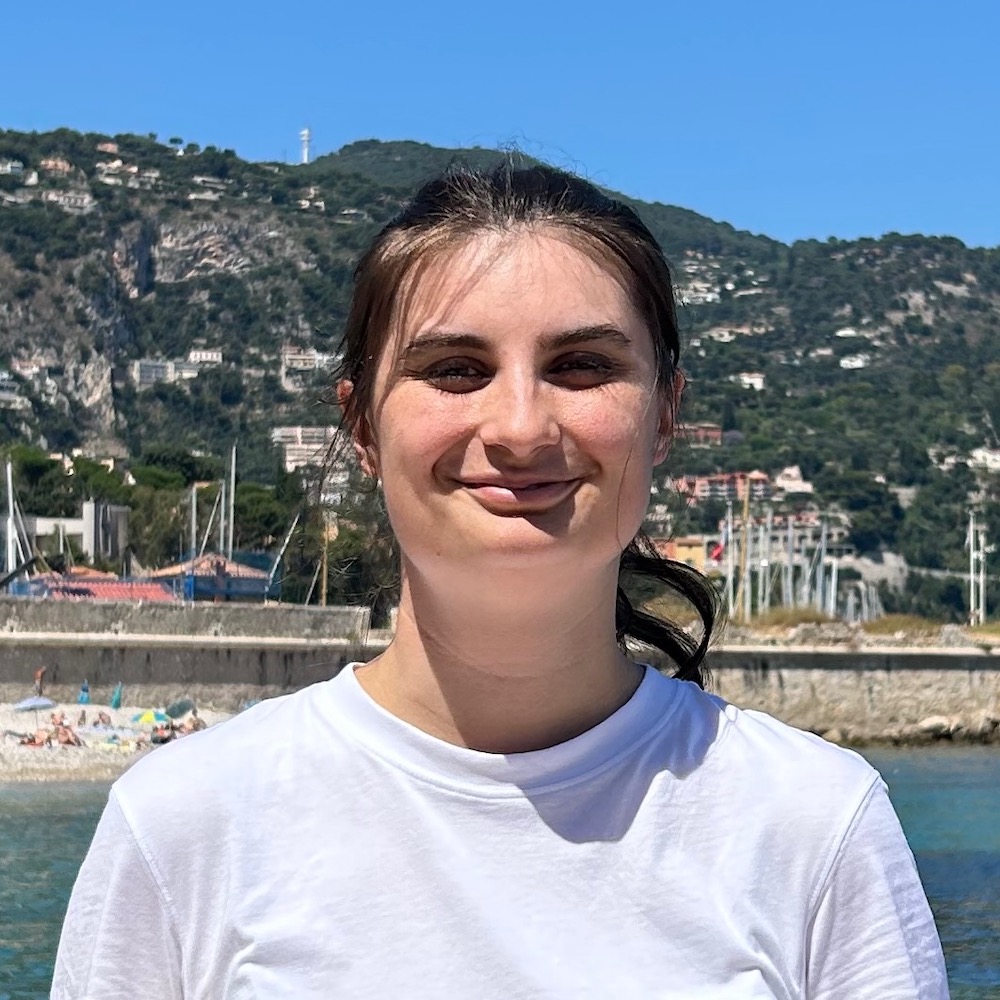
Mélissa Tenaille

Current position :

2024-present : Assistant engineer

Status :

Under contract

Employer :

SORBONNE UNIVERSITE

Team(s) :

Hosting Lab :

LOV (UMR 7093)

Keywords :

Complementary Information

Facilities

Staff

PUBLICATIONS BY

Mélissa Tenaille

3 documents 🔗 HAL Profile
  • Javier Angel Tesán-Onrubia, Marc Tedetti, François Carlotti, Melissa Tenaille, Loic Guilloux, Marc Pagano, Benoit Lebreton, Gaël Guillou, Pamela Fierro-González, Catherine Guigue, Sandrine Chifflet, Théo Garcia, Ismail Boudriga, Malika Belhassen, Amel Bellaaj Zouari, Daniela Bănaru, Marc Tedetti. Marine Pollution Bulletin (2023). ART
    Abstract

    Plankton represents the main source of carbon in marine ecosystems and is consequently an important gateway for contaminants into the marine food webs. During the MERITE– HIPPOCAMPE campaign in the Mediterranean Sea (April–May 2019), plankton was sampled from pumping and net tows at 10 stations from the French coast to the Gulf of Gabès (Tunisia) to obtain different size fractions in contrasted regions. This study combines various approaches, including biochemical analyses, analyses of stable isotope ratios (δ13C, δ15N), cytometry analyses and mixing models (MixSiar) on size-fractions of phyto- and zooplankton from 0.7 to >2000 μm. Pico- and nanoplankton represented a large energetic resource at the base of pelagic food webs. Proteins, lipids, and stable isotope ratios increased with size in zooplankton and were higher than in phytoplankton. Stable isotope ratios suggest different sources of carbon and nutrients at the base of the planktonic food webs depending on the coast and the offshore area. In addition, a link between productivity and trophic pathways was shown, with high trophic levels and low zooplankton biomass recorded in the offshore area. The results of our study highlight spatial variations of the trophic structure within the plankton size-fractions and will contribute to assess the role of the plankton as a biological pump of contaminants.

  • Daniela Bănaru, Laurence Ledireach, Guillaume Crest, Melissa Tenaille, Mireille Harmelin-Vivien. Cybium : Revue Internationale d’Ichtyologie (2022). ART
    Abstract

    The surmullet Mullus surmuletus Linnaeus, 1758 is one of the main target and high value species for small coastal fisheries in the North-Western Mediterranean. Morphometric and reproduction indices of surmullet were determined in fisheries regulated and non-regulated zones neighbouring the Port-Cros National Park (South-Eastern France) in autumn 2019 and spring 2020. Total length of individuals ranged between 12 and 32 cm, with a mode (?) between 17 and 23 cm. Significantly larger individuals were measured in the regulated fishing zones than in non-regulated ones, and in autumn rather than in spring. Females dominated in all zones and seasons, particularly in size classes > 24 cm in spring. Higher gonado-somatic index and more advanced gonadal development stages were observed in both sexes in spring than in autumn. Higher percentages of individuals with mature gonads and high gonado-somatic index were found in the fisheries regulated zone, engendering a higher reproductive potential. These results highlighted the importance of fisheries management with regard to the life-history traits of targeted fish species.

  • Florian Mermillod-Blondin, Pierre Marmonier, Mélissa Tenaille, Damien Lemoine, Michel Lafont, Ross Vander Vorste, Laurent Simon, Laurence Volatier. Aquatic Ecology (2020). ART
    Abstract

    In freshwater environments, the relative contributions of top-down and bottom-up effects on invertebrate communities in relation to productivity are largely ecosystem dependent. Artificial wetlands are increasingly developed to compensate for the loss of natural wetlands; however, their trophic processes remain poorly studied. The present study aimed to evaluate the respective contributions of bottom-up and top-down processes in structuring benthic food webs of three artificial wetlands with varying levels of benthic primary productivity. We found that phototrophic-based food webs in our artificial wetlands were controlled from the bottom-up by primary productivity and algal biomass developing at the water-sediment interface. No significant top-down control of herbivore species by invertebrate predators was detected even in the wetland with the highest productivity. Increased richness of invertebrate grazers and scrapers with benthic primary productivity and algal biomass might have dampened the trophic cascade from predators to primary producers. In contrast with the phototrophic-based food web, analyses performed on the detritus-based food web showed that deposit-feeder invertebrate abundance was not correlated with the quantity of organic matter in sediments, suggesting no bottom-up effect of sedimentary organic matter content on deposit-feeders. More surprisingly, deposit-feeders, especially aquatic oligochaetes, seemed to influence the detritus-based food webs by stimulating organic matter processing and bacterial growth through bioturbation. The present study highlights the occurrence of contrasting trophic processes between phototrophic-based and detritus-based food webs which can have implications on ecosystem functions, such as nutrient cycling and energy fluxes;

PROJECTS