LOV MEMBER
People working@LOV

CONTACT : Carolyn Scheurle

Laboratoire d'Océanographie de Villefranche, LOV
Institut de la Mer de Villefranche, IMEV
181 Chemin du Lazaret
06230 Villefranche-sur-Mer (France)

Research engineer

@ IMEV STAFF WORKING CLOSELY WITH A LOV TEAM - OMTAB

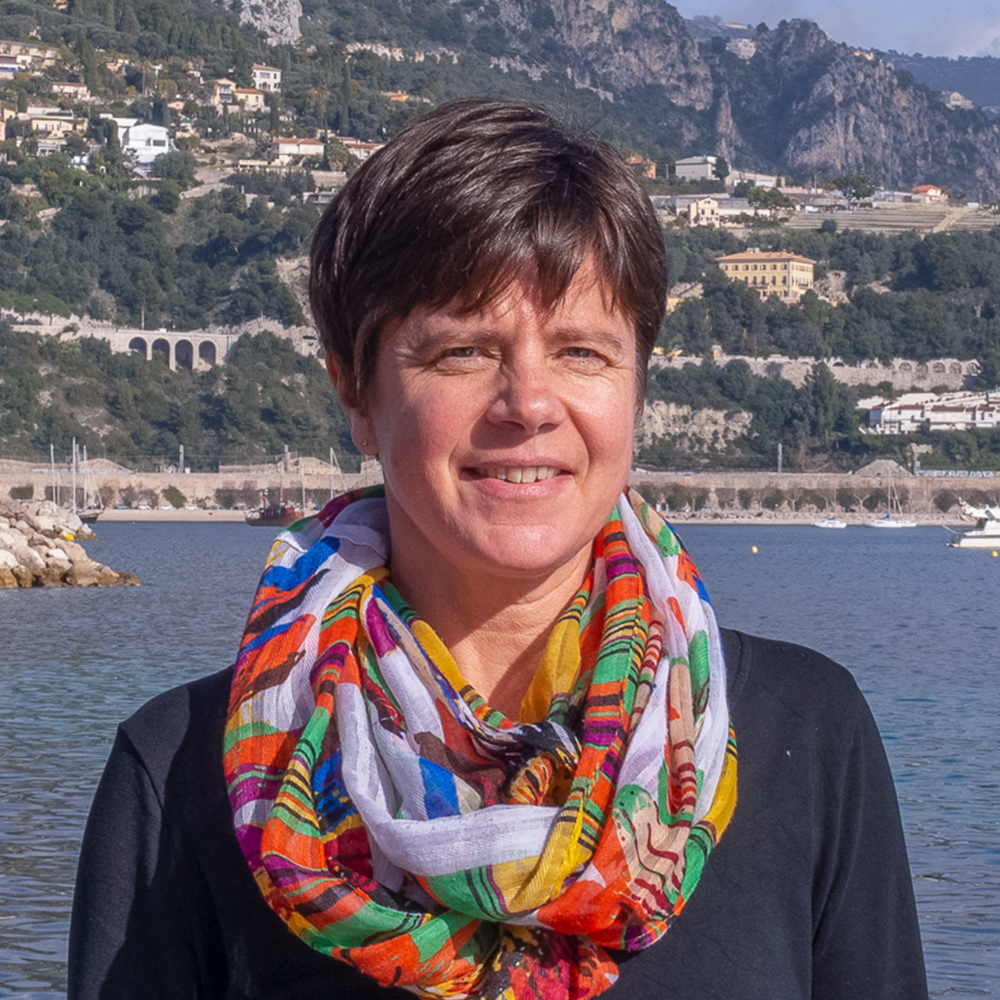
Carolyn Scheurle

Current position :

2013-present: Science Outreach professional at the Institut de la Mer de Villefranche

Status :

Permanent

Employer :

SORBONNE UNIVERSITE

Team(s) :

IMEV STAFF WORKING CLOSELY WITH A LOV TEAM

Hosting Lab :

IMEV (FR 3761)

Keywords :

science-based outreach, science mediation, science communication, science education, ocean literacy

Complementary Information

Carolyn Scheurle is science outreach and mediation coordinator at the Institut de la Mer de Villefranche (IMEV; Sorbonne University and French National Center for Scientific Research, Paris/France). The IMEV considers science outreach as one of its key missions, and its pole Culture Océan resumes main activities. These science-based outreach and mediation activities mainly address a non-scientific public. With the motto « Learn. Think. Create. Enable. Engage. Enjoy » they allow lifelong learning but especially focus on an ocean education for young people. A large spectrum of formats, multifaceted supports and specific approaches guarantee an adapted reach out at local, national and international level.
In 2022, the French National Center for Scientific Research (CNRS) awarded Carolyn Scheurle the science mediation medal. At present, she is also part of the IOC-UNESCO Ocean Literacy Group of Experts, where 20 members from diverse disciplines and countries work together to support and advise on how to make our societies more ocean literate in the context of the Ocean Decade (United Nations Decade of Ocean Science for Sustainable Development, 2021-2030).

Facilities

PUBLICATIONS BY

Carolyn Scheurle

41 documents 🔗 HAL Profile
  • D Hebbeln, Karen-Luise Knudsen, Richard Gyllencreutz, Peter Kristensen, Dorthe Klitgaard-Kristensen, Jan Backman, Carolyn Scheurle, Hui Jiang, Isabelle Gil, Morten Smelror, Phil D Jones, Hans-Petter Sejrup. The Holocene (2006). ART
    Abstract

    We present a high-resolution palaeoenvironmental reconstruction covering the late Holocene from the Skagerrak and other sites in the North Sea area. The data, which are based on the analyses of marine sediment cores, reveal a marked environmental shift that took place between AD 700 and AD 1100, with the most pronounced changes occurring at AD 900. Both surface and bottom waters in the Skagerrak were subject to major circulation and productivity changes at this time due to an enhanced advection of Atlantic waters to the North Sea marking the beginning of the 'Mediaeval Warm Period' (MWP). The observed increase in bottom current strength is especially remarkable as there is hardly any comparable signal in the older part of the record going back to 1000 BC. At the transition to the 'Little Ice Age' (LIA) S the bottom current strength remains at a high level, now probably forced by atmospheric circulation. Thus, despite opposite temperature forcing, these two consecutive climate scenarios are apparently able to generate distinctly stronger bottom currents in the Skagerrak than observed in the preceding 2000 years, and demonstrate the significance of climatic forcing in shaping the marine environment. Indeed, both the MWP and the LIA are reported as strong climatic signals in northwest Europe, being the warmest (except the late twentieth century) and coldest periods, respectively, during at least the last 2000 years.

  • Carolyn Scheurle, D Hebbeln, P Jones. The Holocene (2005). ART
    Abstract

    On the basis of stable oxygen isotopes (δO-18), the summer sea-surface salinity of the German Bight, southeastern North Sea, was determined for the past 800 years. In this near-coastal area, salinity is mainly dependent on the freshwater input of the Elbe River discharging its large catchment, which covers an area of 149 000 km(2) of central Europe. Therefore, a proxy for Elbe River discharge was reconstructed at the same time, and consequently the δO-18 record is also mirroring variations in precipitation within the entire drainage basin. Significant variations in these palaeoenvironmental variables are linked to climatic changes.

  • Carolyn Scheurle, D Hebbeln. Geo-Marine Letters (2003). ART
    Abstract

    A high-resolution sediment core (sedimentation rate similar to2 mm/year) from the German Bight was analysed for its foraminiferal stable oxygen isotope (delta(18)O) composition. These data were correlated with instrumental summer sea-surface temperature and salinity data from the nearby island of Helgoland, reaching back 100 years. Comparing the isotope data with the instrumental records reveals a distinct delta(18)O-salinity relationship (delta(18)O=0.34xS-9.36; r=0.86) for the German Bight, where salinity is mainly driven by freshwater input from the Elbe River. Thus, these findings provide the possibility for future regional paleosalinity and paleodischarge reconstructions for times far beyond the instrumental timescale.