LOV MEMBER
People working@LOV

CONTACT : Camille Merland

Laboratoire d'Océanographie de Villefranche, LOV
Institut de la Mer de Villefranche, IMEV
181 Chemin du Lazaret
06230 Villefranche-sur-Mer (France)

Assistant engineer

@ COMPLEx

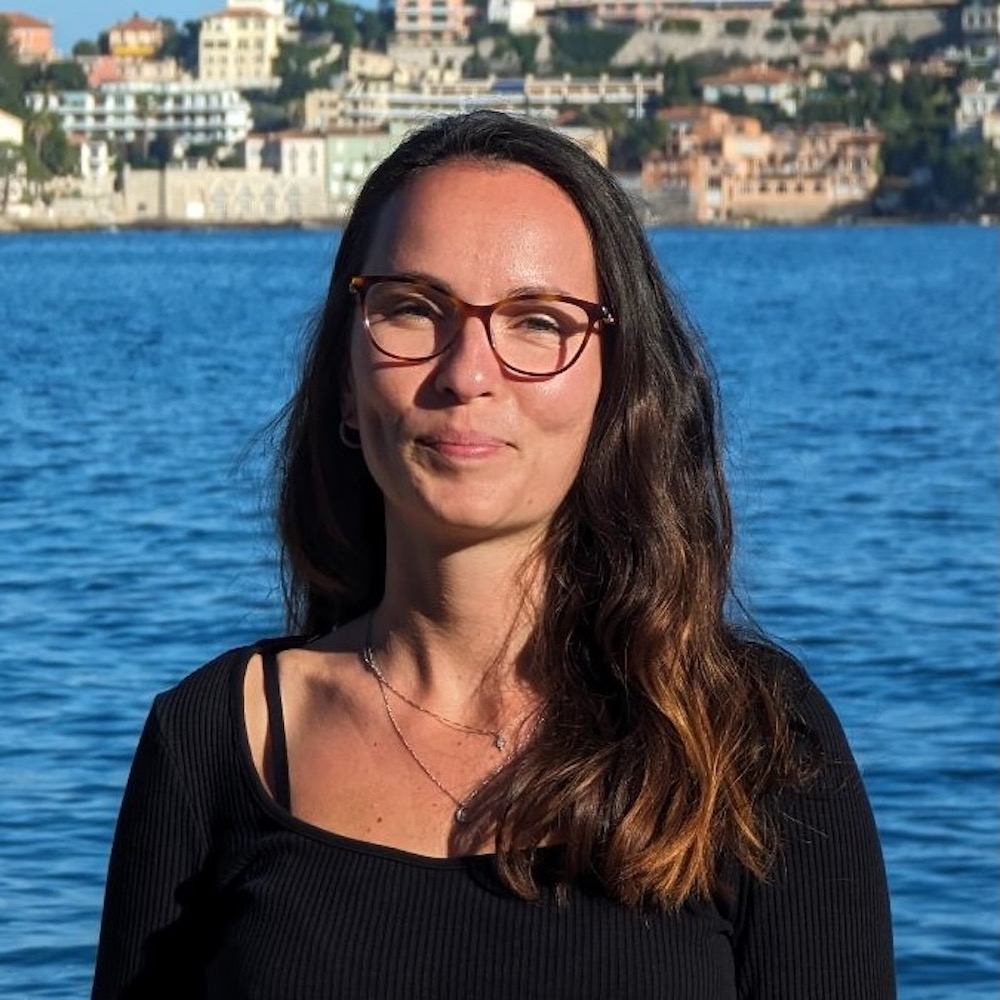
Camille Merland

Current position :

2024-present: Assistant engineer

Status :

Under contract

Employer :

SORBONNE UNIVERSITE

Team(s) :

Hosting Lab :

IMEV (FR 3761)

Keywords :

Complementary Information

Facilities

Staff

PUBLICATIONS BY

Camille Merland

4 documents 🔗 HAL Profile
  • Camille Merland, Marion Thellier, Valentin Djian, Cédric Cotté, Philippe Koubbi. CCAMLR SCIENCE (2025). ART
    Abstract

    This paper investigates the spatial distribution of macrozooplankton across various hydrological regions within the Southern Indian Ocean and the Southern Ocean, encompassing the Crozet and Kerguelen archipelagos in the Southern Ocean, and the islands of Saint-Paul and New Amsterdam in the Southern Indian Ocean. Data used in this study were gathered during the REPCCOAI surveys conducted during the summers from 2017 to 2019 aboard the R/V Marion Dufresne II. Macrozooplankton was collected using an Isaacs-Kidd Midwater Trawl. Taxonomic analysis revealed 248 taxa of zooplankton belonging to 20 orders. Marked differences in taxa composition were observed between the Subtropical region of the Southern Indian Ocean and the Southern Ocean because of the significant influence of hydrological fronts, such as the Subtropical Front (STF) and the Subantarctic Front (SAF), in structuring zooplankton assemblages. These differences are due to the closeness of these fronts, notably North of Crozet, where a triple front is observed, and North of Kerguelen, where the transition between the Polar Frontal Zone (PFZ) and the Subtropical Zone (STZ) is narrow.

  • Camille Merland, Clara Azarian, Francesco d'Ovidio, Cédric Cotté, Cédric Cotté. CCAMLR SCIENCE (2025). ART
    Abstract

    Environmental regionalisations are useful tools for spatial planning and are mostly performed at the global scale to define biogeochemical provinces from surface data or in the mesopelagic zone. However, these regionalisations often lack separations at scales relevant for conservation as they do not always consider regional patterns such as island effects or regional dynamic patterns. Our study aimed to overcome these limitations by defining coherent physical and biogeochemical regions within the Southern Indian Ocean (20°W-160°E; 30°S-60°S), considering both spatial and temporal dynamics of environmental parameters. For this purpose, two complementary approaches have been used: one focusing on surface environmental data, and the other considering space-time dimensions through their vertical profiles. The first classical method, based on multivariate analyses, allowed us to delineate regions latitudinally due to the existing temperature and oxygen concentration gradient and revealed regional patterns such as highly energetic regions or productive areas. The newly developed second approach used functional analyses and provided additional information, including subdivision in the Subtropical Zone dominated by mesopelagic patterns. This subdivision results from temperature differences. It separates longitudinally the subtropical region with warmer waters found in the western area, likely transported from lower latitudes by the Agulhas Return Current. Climate velocities of temperature (i.e. speed of isotherm drift) were also computed for both epipelagic and mesopelagic regions to investigate their potential shift due to climate change. This environmental regionalisation brings relevant information to understand the distribution of the pelagic diversity and abundance and highlights the importance of accounting for vertical structures in a context of climate change.

  • Valentin Djian, Camille Merland, Marion Thellier, Boris Leroy, Cédric Cotté, Philippe Koubbi. CCAMLR SCIENCE (2025). ART
    Abstract

    <div><p>Plankton plays an important role in the functioning of marine ecosystems, for example, through their role as prey. It is therefore important to understand the spatial distribution of assemblages of key taxa. This study aimed to determine the effect of hydrologic and topographic features on two major macrozooplankton groups: euphausiids and amphipods, which are important prey of seabirds and marine mammals. The biogeography of these taxa's species between the Southern Indian Ocean and the North Indian sector of the Southern Ocean will be assessed by network analyses on species abundances. Our results from the REPCCOAI surveys from 2017 to 2019 between Crozet, Kerguelen and St Paul and New Amsterdam revealed a strong biogeographic separation between the subtropical and subantarctic zones. Species assemblages for each major taxon revealed a distinction between off shelf areas and the neritic zone and between high and low productivity areas, underlining the role of the subantarctic islands and their effect on primary production in the biogeography of the southern plankton. In the subtropical Indian Ocean, no significant major distinction was observed with the network analysis, even if some sites seem to show an influence of the Agulhas Return Current.</p></div>

  • Lloyd Izard, N. Fonvieille, Camille Merland, Philippe Koubbi, David Nerini, Jérémie Habasque, Anne Lebourges-Dhaussy, Claire Lo Monaco, Gildas Roudaut, Francesco d'Ovidio, Jean-Benoît Charrassin, Cédric Cotté. Journal of Marine Systems (2024). ART
    Abstract

    The pelagic zone is home to a large diversity of organisms such as macrozooplankton and micronekton (MM), connecting the surface productive waters to the mesopelagic layers (200-1000 m) through diel vertical migrations (DVM). Active acoustics complement net sampling observations by detecting sound-scattering layers (SL) of organisms, allowing to monitor the MM dynamics with a high spatio-temporal resolution. Multifrequency analyses are a pertinent approach to better integrate the rich diversity of organisms composing SLs and their respective dynamics. However, analysing simultaneously emitted acoustic signals with distinct depth ranges and separating spatial from temporal variability is challenging and needs adapted tools to be fully exploited. This study examines the pelagic realm in a transition zone between the Southern Ocean and the subtropical Indian Ocean, crossing the Saint-Paul and Amsterdam islands' natural reserve. We extended a Multivariate Functional Principal Component Analysis (mfPCA) to analyse the joint vertical variation of five frequencies from two oceanographic cruises (2016 and 2022), allowing the decomposition of the acoustic dataset into orthogonal vertical modes (VM) of variability. We found the first VM to be linked to the temporal variability due to DVM, while the following majorly depict patterns in spatial distribution. Overall, from the subantarctic to the subtropical zones, we observed (i) enrichment of densities in the surface layer (0-100 m), (ii) a decrease in densities in the intermediate layer during the daytime (100-300 m) and (iii) the apparition of an intensive deep scattering layer on the 38 kHz. We explored VMs' connection with in -situ environmental conditions by clustering our observations into three distinct environmental-acoustic regions. These regions were compared with vertically integrated nautical area scattering coefficient distribution, a proxy for marine organisms' biomass. Additionally, we analysed species assemblage changes from complementary cruises to further elucidate the observed acoustic distribution. We show that the mfPCA method is promising to better integrate the pelagic horizontal, vertical and temporal dimensions which is a step towards further investigating the control of the environment on the distribution and structuring of pelagic communities.

PROJECTS