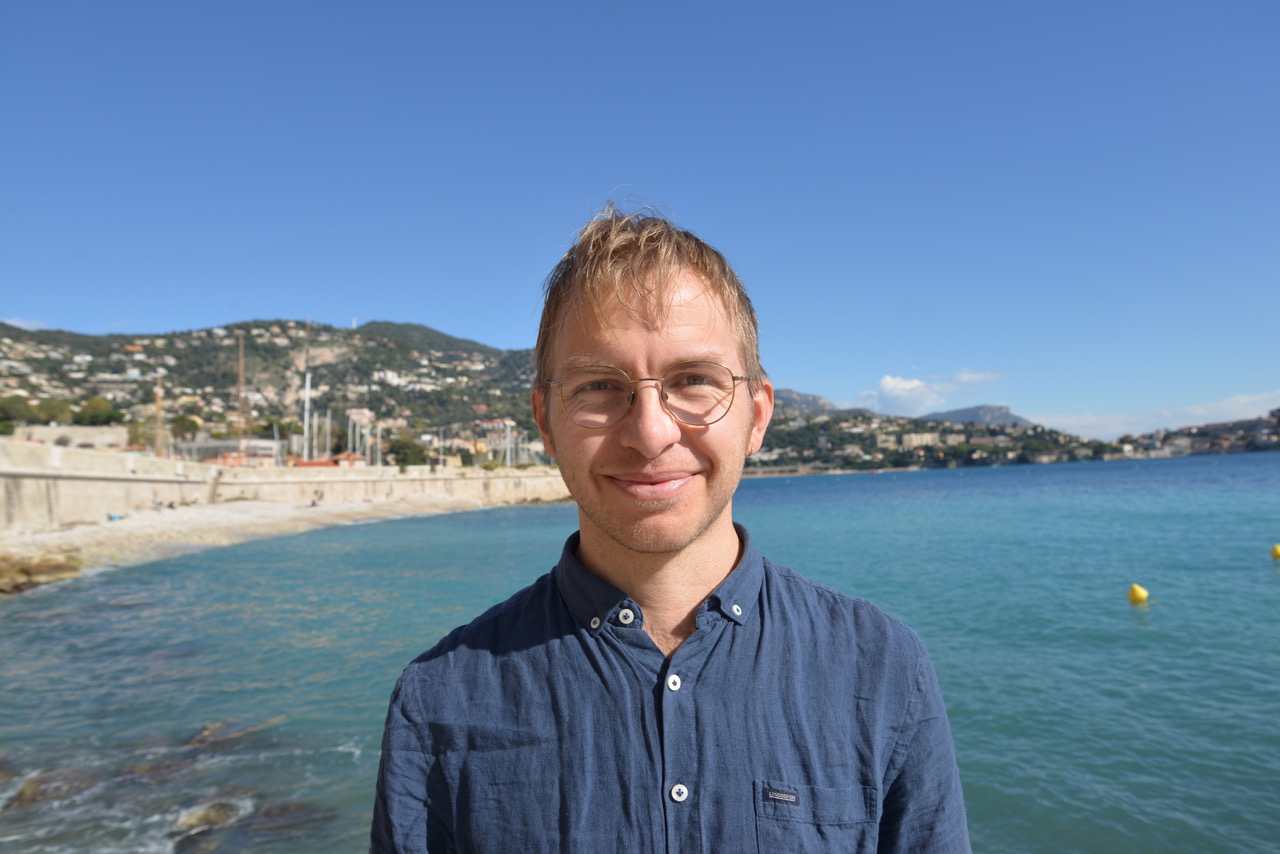
LOV MEMBER
People working@LOV

CONTACT : Theodor Kindeberg

Laboratoire d'Océanographie de Villefranche, LOV
Institut de la Mer de Villefranche, IMEV
181 Chemin du Lazaret
06230 Villefranche-sur-Mer (France)

Post-doctoral fellow

@ CHOC

Theodor Kindeberg

Current position :

2024 - Present : Post-doctoral fellow

Status :

Under contract

Employer :

SORBONNE UNIVERSITE

Team(s) :

Hosting Lab :

LOV (UMR 7093)

Keywords :

Complementary Information

Facilities

PUBLICATIONS BY

Theodor Kindeberg

11 documents 🔗 HAL Profile
  • Björn Almström, Theodor Kindeberg, Per Carlsson, Johan Hollander. Ecological Engineering (2026). ART
    Abstract

    Seagrass meadows have been proposed as a nature-based coastal protection measure to reduce incoming wave energy. Although numerous studies have demonstrated the capability of seagrass meadows to attenuate waves, their real-world effectiveness in providing coastal protection remains uncertain. The aim of this study was to quantify the influence of a Zostera marina meadow located in a non-tidal fetch-limited environment on three coastal protection metrics: wave runup at the shore, the storm-induced erosion of dunes, and the longshore sediment transport. Field observations were combined with numerical wave simulations using the open-source model SWAN. The field study encompassed one year of wave observations along a transect from 1.5 to 8.0 m depth, using a wave buoy and six pressure sensors. Seagrass characteristics were mapped on four occasions to capture seasonal variability. The effect on wave attenuation of the seagrass meadow was isolated from other dissipation processes by comparing model scenarios with and without vegetation. Results showed that maximum wave attenuation occurred under high-energy conditions, with a maximum wave height attenuation of 12%. However, as depth-induced breaking became the dominant dissipation process, the contribution of the seagrass meadow diminished, leading only to modest reductions in wave runup (1.0%), storm erosion volume (4.0%), and longshore sediment transport (0.6%). These findings indicate that seagrass meadows situated in relatively deep, fetch-limited environments offer limited potential for wave energy dissipation and coastal protection.

  • Theodor Kindeberg, Karl Michael Attard, Jana Hüller, Julia Müller, Cintia Organo Quintana, Eduardo Infantes. Biogeosciences (2024). ART
    Abstract

    Abstract. Due to large losses of seagrass meadows worldwide, restoration is proposed as a key strategy for increasing coastal resilience and recovery. The emergence of a seagrass meadow is expected to substantially amplify biodiversity and enhance benthic metabolism by increasing primary productivity and respiration. Nevertheless, open questions remain regarding the metabolic balance of aging seagrass meadows and the roles benthic communities within the seagrass ecosystem play in overall metabolism. To address these questions, we investigated a chronosequence of bare sediments and adjacent Zostera marina meadows of 3 and 7 years since restoration alongside a natural meadow located within a high-temperate marine embayment in Gåsö, Sweden. We combined continuous measurements of O2 fluxes using underwater eddy covariance with dissolved inorganic carbon (DIC) and O2 fluxes from benthic chambers during the productive season (July). Based on the ratio between O2 and DIC, we derived site-specific photosynthetic and respiratory quotients, enabling the conversion of eddy covariance fluxes to DIC. We assessed benthic diversity parameters as potential drivers of metabolic flux variability. We observed high rates of gross primary productivity (GPP) spanning −18 to −82 mmolDICm-2d-1, which increased progressively with meadow age. Community respiration (CR) mirrored the GPP trend, and all meadows were net heterotrophic (GPP < CR), with net community productivity (NCP) ranging from 16 to 28 mmolDICm-2d-1. While autotrophic biomass did not increase with meadow age, macrophyte diversity did, elucidating potential effects of niche complementarity among macrophytes on community metabolism. These findings provide valuable insights into how community composition and meadow development relate to ecosystem functioning, highlighting potential tradeoffs between carbon uptake and biodiversity.

  • Theodor Kindeberg, Johan Severinson, Per Carlsson. Journal of Experimental Marine Biology and Ecology (2022). ART
  • Theodor Kindeberg, Björn Almström, Mona Skoog, Pål Axel Olsson, Johan Hollander. Nordic Journal of Botany (2022). ART
    Abstract

    Coastal protection has evolved from focusing on hard solutions such as breakwaters and groynes to include soft or nature‐based solutions (NbS). NbS have been proposed as cost‐effective means to offer long‐term coastal protection and at the same time strengthen coastal resilience and biodiversity. However, projects utilizing NbS for coastal protection have often focused on a single solution and the evidence of improved biodiversity remain equivocal. In this paper, we review solutions traditionally used for disparate purposes – namely beach nourishment and the establishment of vascular plants such as seagrass and dune grass. The main incentives behind large‐scale beach nourishment projects are often the cost‐effectiveness, multifunctionality and dynamic shoreline protection whereas the focus of vegetation restoration has typically been on recreating important habitats and not specifically as a coastal protection measure. Based on previous studies and an on‐going large‐scale coastal adaptation project in southern Sweden, we investigate the feasibility of combining these seemingly dichotomous management strategies to yield a viable physical defense and at the same time strengthen coastal biodiversity and ecosystem multifunctionality. Given the urgency in combatting biodiversity loss and adapting to a changing climate, management interventions for coastal protection should explicitly incorporate ecological values into every coastal protection measure and seek innovative, integrated approaches that consider both geomorphological and ecological values and the possible complementarity between the two.

  • Theodor Kindeberg, Nicholas Bates, Travis Courtney, Tyler Cyronak, Alyssa Griffin, Fred Mackenzie, May-Linn Paulsen, Andreas Andersson. Aquatic Geochemistry (2020). ART
    Abstract

    Abstract Seagrass systems are integral components of both local and global carbon cycles and can substantially modify seawater biogeochemistry, which has ecological ramifications. However, the influence of seagrass on porewater biogeochemistry has not been fully described, and the exact role of this marine macrophyte and associated microbial communities in the modification of porewater chemistry remains equivocal. In the present study, carbonate chemistry in the water column and porewater was investigated over diel timescales in contrasting, tidally influenced seagrass systems in Southern California and Bermuda, including vegetated ( Zostera marina ) and unvegetated biomes (0–16 cm) in Mission Bay, San Diego, USA and a vegetated system ( Thallasia testudinium ) in Mangrove Bay, Ferry Reach, Bermuda. In Mission Bay, dissolved inorganic carbon (DIC) and total alkalinity (TA) exhibited strong increasing gradients with sediment depth. Vertical porewater profiles differed between the sites, with almost twice as high concentrations of DIC and TA observed in the vegetated compared to the unvegetated sediments. In Mangrove Bay, both the range and vertical profiles of porewater carbonate parameters such as DIC and TA were much lower and, in contrast to Mission Bay where no distinct temporal signal was observed, biogeochemical parameters followed the semi-diurnal tidal signal in the water column. The observed differences between the study sites most likely reflect a differential influence of biological (biomass, detritus and infauna) and physical processes (e.g., sediment permeability, residence time and mixing) on porewater carbonate chemistry in the different settings.

  • Travis Courtney, Theodor Kindeberg, Andreas Andersson. PLoS ONE (2020). ART
    Abstract

    The North Atlantic Oscillation (NAO) has been hypothesized to drive interannual variability in Bermudan coral extension rates and reef-scale calcification through the provisioning of nutritional pulses associated with negative NAO winters. However, the direct influence of the NAO on Bermudan coral calcification rates remains to be determined and may vary between species and reef sites owing to implicit differences in coral life history strategies and environmental gradients across the Bermuda reef platform. In this study, we investigated the connection between negative NAO winters and Bermudan Diploria labyrinthiformis , Pseudodiploria strigosa , and Orbicella franksi coral calcification rates across rim reef, lagoon, and nearshore reef sites. Linear mixed effects modeling detected an inverse correlation between D . labyrinthiformis calcification rates and the winter NAO index, with higher rates associated with increasingly negative NAO winters. Conversely, there were no detectable correlations between P . strigosa or O . franksi calcification rates and the winter NAO index suggesting that coral calcification responses associated with negative NAO winters could be species-specific. The correlation between coral calcification rates and winter NAO index was significantly more negative at the outer rim of the reef (Hog Reef) compared to a nearshore reef site (Whalebone Bay), possibly indicating differential influence of the NAO as a function of the distance from the reef edge. Furthermore, a negative calcification anomaly was observed in 100% of D . labyrinthiformis cores in association with the 1988 coral bleaching event with a subsequent positive calcification anomaly in 1989 indicating a post-bleaching recovery in calcification rates. These results highlight the importance of assessing variable interannual coral calcification responses between species and across inshore-offshore gradients to interannual atmospheric modes such as the NAO, thermal stress events, and potential interactions between ocean warming and availability of coral nutrition to improve projections for future coral calcification rates under climate change.

  • Theodor Kindeberg, Emilia Röhr, Per-Olav Moksnes, Christoffer Boström, Marianne Holmer. Biology Letters (2019). ART
    Abstract

    Seagrass meadows are able to store significant amounts of organic carbon in their underlying sediment, but global estimates are uncertain partly owing to spatio-temporal heterogeneity between and within areas and species. In order to provide robust estimates, there is a need to better understand the fate of, and mechanisms behind, organic carbon storage. In this observational study, we analyse a suite of biotic and abiotic parameters in sediment cores from 47 different eelgrass ( Zostera marina ) beds spanning the distributional range of the Northern Hemisphere. Depth profiles of particulate organic carbon (POC) revealed three patterns of vertical distribution where POC either increased, decreased or showed no pattern with sediment depth. These categories exhibited distinct profiles of δ 13 C and C:N ratios, where high POC profiles had a proportionally larger storage of eelgrass-derived material whereas low POC profiles were dominated by phytoplanktonic and macroalgal material. However, high POC did not always translate into high carbon density. Nevertheless, this large-scale dataset provides evidence that the variability in organic matter source in response to natural and anthropogenic environmental changes affects the potential role of eelgrass beds as POC sinks, particularly where eelgrass decline is observed.

PROJECTS