LOV MEMBER
People working@LOV

CONTACT : Marion Vilain

Laboratoire d'Océanographie de Villefranche, LOV
Institut de la Mer de Villefranche, IMEV
181 Chemin du Lazaret
06230 Villefranche-sur-Mer (France)

Post-doctoral fellow

@ COMPLEx

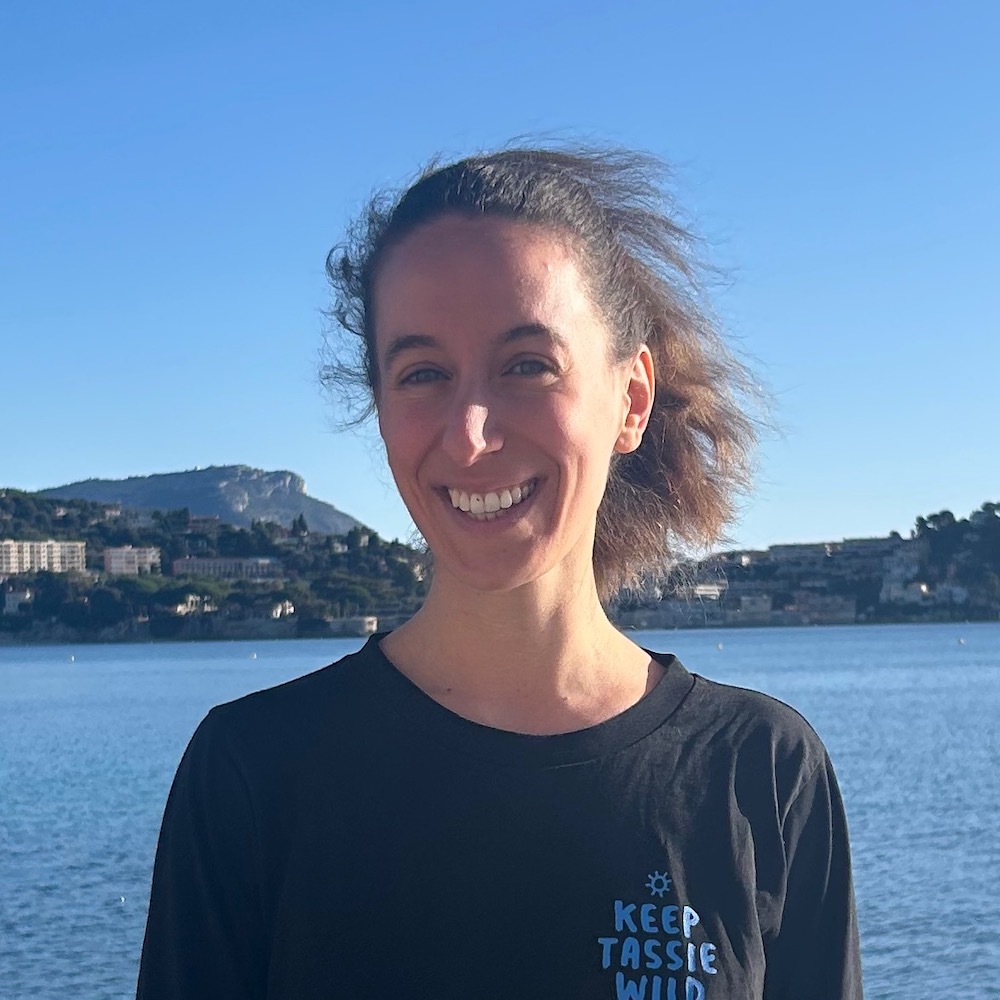
Marion Vilain

Current position :

2025-present: Post-doctoral fellow

Status :

Under contract

Employer :

SORBONNE UNIVERSITE

Team(s) :

Hosting Lab :

LOV (UMR 7093)

Keywords :

Complementary Information

Facilities

PUBLICATIONS BY

Marion Vilain

9 documents 🔗 HAL Profile
  • Marion Vilain, Eric Goberville, Dorothée Vincent, Fabio Benedetti, Frédéric Olivier. Journal of Biogeography (2025). ART
    Abstract

    ABSTRACT Aim Assessing the influence of diel vertical migration (DVM) on biogeographic patterns to improve the macroecological characterisation of the structure and function of zooplankton communities. Location North Atlantic Ocean and adjacent seas. Taxon Marine copepod species. Methods We base our bioregionalisation on Continuous Plankton Recorder (CPR) data of copepod species abundances from 1966 to 2021. We separate day and night samples using the solar elevation corresponding to civil twilight. For each condition, we interpolate abundances onto a grid adapted to the irregular sampling effort. We then generate a bipartite network (geographical cells—species) on which we apply the Map Equation clustering algorithm to delineate bioregions and identify their underlying copepod communities. We use canonical correspondence analyses to characterise the resulting bioregions in terms of environmental forcings, species composition and community‐weighted mean traits. Results We identify four bioregions for both day and night partitions, with dynamic transitions and changes in spatial patterns as well as in community composition between day and night. While environmental forcings seem to transcend diel variations, ecological features of bioregions show day/night discrepancies: higher copepod diversity at night is driven by changes in species composition mediated by diel vertical migration. Main Conclusions We highlight how day/night variations driven by highly migratory copepod species shape community spatial patterns and species composition. We uncover distinct levels of functional diversity across bioregions, suggesting different responses of copepod communities to environmental changes. Transition zones emerge as crucial markers of pelagic bioregion connectivity, emphasising their dynamic nature. Embracing a partitioning approach that better captures these dynamics is essential for understanding how ecosystems function and will evolve in response to climate changes.

  • Mathilde Dugenne, Marco Corrales-Ugalde, Jessica Luo, Rainer Kiko, Todd O'Brien, Jean-Olivier Irisson, Fabien Lombard, Lars Stemmann, Charles Stock, Clarissa Anderson, Marcel Babin, Nagib Bhairy, Sophie Bonnet, Francois Carlotti, Astrid Cornils, E. Taylor Crockford, Patrick Daniel, Corinne Desnos, Laetitia Drago, Amanda Elineau, Alexis Fischer, Nina Grandrémy, Pierre-Luc Grondin, Lionel Guidi, Cécile Guieu, Helena Hauss, Kendra Hayashi, Jenny Huggett, Laetitia Jalabert, Lee Karp-Boss, Kasia Kenitz, Raphael Kudela, Magali Lescot, Claudie Marec, Andrew Mcdonnell, Zoe Mériguet, Barbara Niehoff, Margaux Noyon, Thelma Panaïotis, Emily Peacock, Marc Picheral, Emilie Riquier, Collin Roesler, Jean-Baptiste Romagnan, Heidi Sosik, Gretchen Spencer, Jan Taucher, Chloé Tilliette, Marion Vilain. Earth System Science Data (2024). ART
    Abstract

    Abstract. In marine ecosystems, most physiological, ecological, or physical processes are size dependent. These include metabolic rates, the uptake of carbon and other nutrients, swimming and sinking velocities, and trophic interactions, which eventually determine the stocks of commercial species, as well as biogeochemical cycles and carbon sequestration. As such, broad-scale observations of plankton size distribution are important indicators of the general functioning and state of pelagic ecosystems under anthropogenic pressures. Here, we present the first global datasets of the Pelagic Size Structure database (PSSdb), generated from plankton imaging devices. This release includes the bulk particle normalized biovolume size spectrum (NBSS) and the bulk particle size distribution (PSD), along with their related parameters (slope, intercept, and R2) measured within the epipelagic layer (0–200 m) by three imaging sensors: the Imaging FlowCytobot (IFCB), the Underwater Vision Profiler (UVP), and benchtop scanners. Collectively, these instruments effectively image organisms and detrital material in the 7–10 000 µm size range. A total of 92 472 IFCB samples, 3068 UVP profiles, and 2411 scans passed our quality control and were standardized to produce consistent instrument-specific size spectra averaged to 1° × 1° latitude and longitude and by year and month. Our instrument-specific datasets span most major ocean basins, except for the IFCB datasets we have ingested, which were exclusively collected in northern latitudes, and cover decadal time periods (2013–2022 for IFCB, 2008–2021 for UVP, and 1996–2022 for scanners), allowing for a further assessment of the pelagic size spectrum in space and time. The datasets that constitute PSSdb's first release are available at https://doi.org/10.5281/zenodo.11050013 (Dugenne et al., 2024b). In addition, future updates to these data products can be accessed at https://doi.org/10.5281/zenodo.7998799.

  • Cécile Guieu, Sophie Bonnet, Fatima Abadou, Samir Alliouane, Sophie Arnaud-Haond, Verónica Arnone, Anne-Claire Baudoux, Chloé Baumas, Lucie Beillard, Mar Benavides, Ilana Berman-Frank, Nagib Bhairy, Estelle Bigeard, Cédric Boulart, Pascale Bouruet-Aubertot, Philip Boyd, Matthieu Bressac, Mercedes Camps, Samuel Chaffron, Valérie Chavagnac, Servanne Chevaillier, Julien Collot, Yannis Cuypers, Guillaume de Liège, Emmanuel de Saint Léger, Colomban de Vargas, Karine Desboeufs, Marie-Maëlle Desgranges, Christine Destrigneville, Céline Dimier, Wendy Diruit, Delphine Dissard, Jean-Francois Doussin, Aurélie Dufour, Gabriel Dulaquais, Jean-Michel Fernandez, Anaïs Feron, Mathilde Ferrieux, Alba Filella, Heather Forrer, Pierre Fourrier, Jean-Philippe Gac, Martin Gachenot, Cécile Gaimoz, Laurence Garczarek, Frédéric Gazeau, Aridane González, David González‐Santana, Thomas Gorgues, Nicolas Grima, Jean-Michel Grisoni, Olivier Grosso, Catherine Guigue, Jérémie Habasque, Lars-Eric Heimbürger-Boavida, Catherine Jeandel, Christian Jeanthon, Emilie Journet, Angela Knapp, François Lacan, Florence Le Gall, Frédéric Le Moigne, Pierre Le Moal, Karine Leblanc, Nathalie Leblond, Anne Lebourges-Dhaussy, Jade Leconte, Dominique Lefèvre, Fabien Lombard, Anne Lorrain, Caroline Lory, Christophe Maes, Léo Mahieu, Dominique Marie, Camille Mazoyer, Christophe Menkes, Vincent Michoud, Maryline Montanes, Fabrice Not, Sandra Nunige, Francesco Paparella, Martin Patriat, Bernard Pelletier, Anne Petrenko, Hélène Planquette, David Point, Gemma Portlock, Ian Probert, Elvira Pulido-Villena, Morgane Ratin, Lavenia Ratnarajah, Ricardo Riso, Andrea Rizzo, Pascal Salaun, Géraldine Sarthou, Catherine Schmechtig, Karine Sellegri, Nathalie Simon, Alessandro Tagliabue, Vincent Taillandier, Christian Tamburini, Marc Tedetti, Fanny Thibon, Chloé Tilliette, Natalia Torres-Rodríguez, Sylvain Triquet, Julia Uitz, France van Wambeke, Daniel Vaulot, Nathalie Vigier, Marion Vilain, Maria Helena Vorrath, Lucas Weppe, Hannah Whitby. OTHER
    Abstract

    The objective of the TONGA oceanographic expedition was to study the control of productivity and carbon sequestration by micronutrients of shallow hydrothermal origin in the Western Tropical South Pacific (WTSP) Ocean. The 37-day oceanographic survey took place on board the R/V L’Atalante in 2019 between Oct. 31 to Dec. 6 (Nouméa-Nouméa). Over a large area of the WTSP the team acquired numerous results on both the entire water column (up to the sediment) and the atmosphere. Specific task are represented on figure 1: (task 1) to characterize chemically and optically shallow hydrothermal fluids and to compare the source from below (shallow hydrothermal fluids) with the source from above (atmospheric deposition); (task 2) to quantify the dynamical dispersion of the fluids at small and regional scale; (task 3) to investigate the impact of the shallow hydrothermal sources on the biological activity and diversity, and the feedback to the atmosphere via the oceanic emissions of primary and secondary aerosols. (Task 4) to communicate about the campaign (see for example our Tweeter account (https://twitter.com/tongaproject) and the movie (26’) both in French (https://www.youtube.com/watch?v=e5kAd0i6Dck) and English (https://www.youtube.com/watch?v=UeABf-cVR-k). A long west to east (up to the blue waters of the gyre) transect allowed to characterize the different biogeochemical provinces crossed and a focus in the region of the Lau Basin allowed to investigate the impact of shallow hydrothermal sources. A series of short and long stations allowed to fully characterize the stocks and the fluxes in the different provinces. Short-term (up to 10 days) processes studies have been conducted (drifting moorings and minicosms experiments). Part of these results will feed into important modeling work. A fixed mooring line launched at the end of the campaign and recovered in Nov. 2020 as well as the 7 ARGO floats and 20 drifting buoys that were dropped during the campaign provide a broader temporal context of the acquisitions done during the campaign. An important focus of the campaign was the trace metal characterization of the entire water column. For this, TONGA has been labeled by the international program GEOTRACES (https://www.geotraces.org/). The impact on biological communities of fluids is supported by the international IMBER program (https://imber.info/). The TONGA project is also part of the LEFE program (funding by LEFE-CYBER and LEFE-GMMC), the ANR (Appel à projets génériques) and the Fondation A-MIDeX of the Aix-Marseille Université.

  • Zoé Mériguet, Marion Vilain, Alberto Baudena, Chloé Tilliette, Jérémie Habasque, Anne Lebourges-Dhaussy, Nagib Bhairy, Cécile Guieu, Sophie Bonnet, Fabien Lombard. Frontiers in Marine Science (2023). ART
    Abstract

    The Western Tropical South Pacific (WTSP) basin has been identified as a hotspot of atmospheric dinitrogen fixation due to the high dissolved iron ([DFe]) concentrations (up to 66 nM) in the photic layer linked with the release of shallow hydrothermal fluids along the Tonga-Kermadec arc. Yet, the effect of such hydrothermal fluids in structuring the plankton community remains poorly studied. During the TONGA cruise (November-December 2019), we collected micro- (20-200 μm) and meso-plankton (>200 μm) samples in the photic layer (0-200 m) along a west to east zonal transect crossing the Tonga volcanic arc, in particular two volcanoes associated with shallow hydrothermal vents (< 500 m) in the Lau Basin, and both sides of the arc represented by Melanesian waters and the South Pacific Gyre. Samples were analyzed by quantitative imaging (FlowCam and ZooScan) and then coupled with acoustic observations, allowing us to study the potential transfer of phytoplankton blooms to higher planktonic trophic levels. We show that micro- and meso-plankton exhibit high abundances and biomasses in the Lau Basin and, to some extent, in Melanesian waters, suggesting that shallow hydrothermal inputs sustain the planktonic food web, creating productive waters in this otherwise oligotrophic region. In terms of planktonic community structure, we identified major changes with high [DFe] inputs, promoting the development of a low diversity planktonic community dominated by diazotrophic cyanobacteria. Furthermore, in order to quantify the effect of the shallow hydrothermal vents on chlorophyll a concentrations, we used Lagrangian dispersal models. We show that chlorophyll a concentrations were significantly higher inside the Lagrangian plume, which came into contact with the two hydrothermal sites, confirming the profound impact of shallow hydrothermal vents on plankton production.

PROJECTS