-
Marine Fourrier, Laurent Coppola, Fabrizio d'Ortenzio.
Med2020 (2020).
COMM
-
Xavier Andre, Pierre-Yves Le Traon, Serge Le Reste, Vincent Dutreuil, Edouard Leymarie, Damien Malardé, Claudie Marec, Jérôme Sagot, Martin Amice, Marcel Babin, Hervé Claustre, Arnaud David, Fabrizio d'Ortenzio, Nicolas Kolodziejczyk, José Luis Lagunas, Marc Le Menn, Bertrand Moreau, David Nogré, Christophe Penkerc'H, Antoine Poteau, Corentin Renaut, Christophe Schaeffer, Vincent Taillandier, Virginie Thierry.
Frontiers in Marine Science (2020).
ART
Abstract
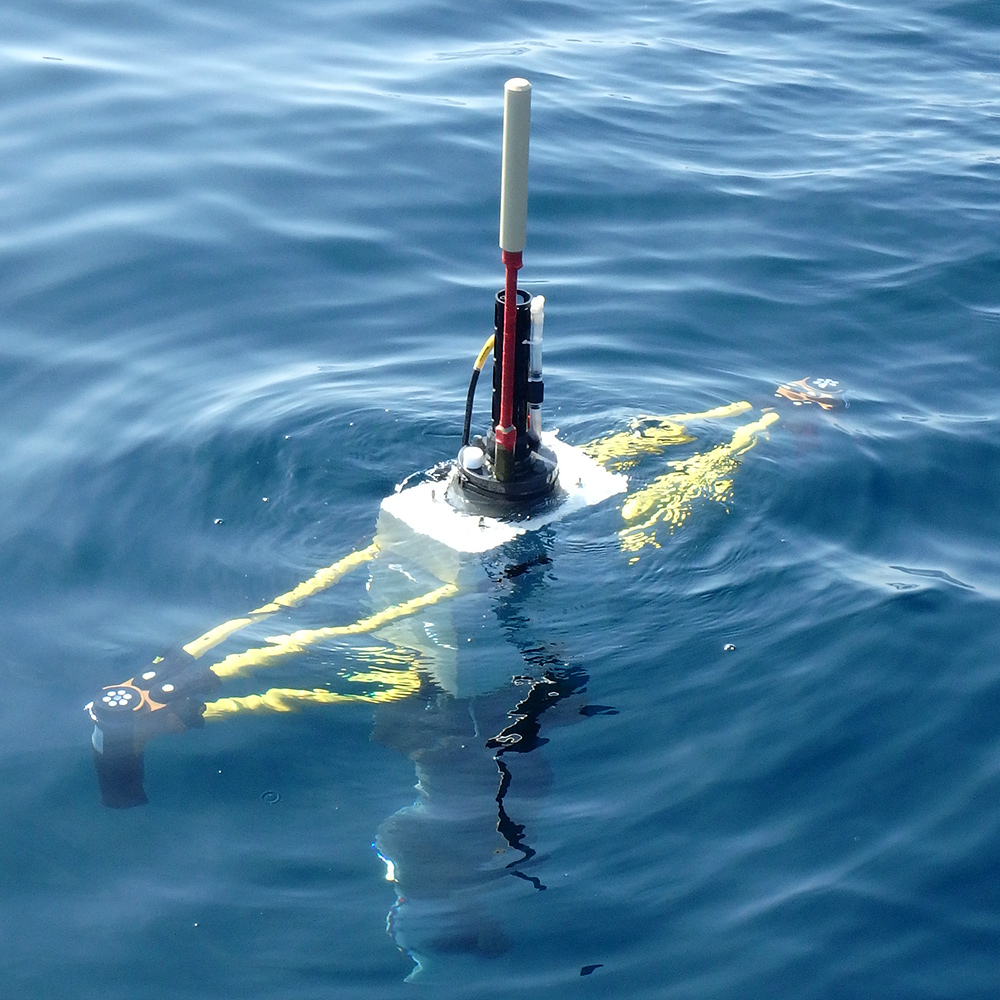
The international array of profiling floats known as Argo is a major component of the global ocean-and climate-observing system. In 2010, the NAOS (Novel Argo Observing System) project was selected as part of France's Equipex "Investissement d'Avenir" program. The objectives of NAOS were to consolidate the French contribution to the Argo core mission (global temperature and salinity measurements down to 2,000 m) as well as to develop the future generation of French Argo profiling floats and prepare the next phase of the Argo program with an extension to the deep ocean (Deep-Argo), biogeochemistry (BGC-Argo) and polar seas. This paper summarizes the main technological advances and at-sea validations carried out as part of NAOS: development of a deep (4,000 m) float, a new BGC float for Research & Development (R&D) applications, and a BGC float for deployments in Arctic areas, assessment of a new density and Absolute Salinity optical sensor, improvement of the reliability of the standard Argo float, and upgraded satellite-transmission performance. French profiling floats developed in this way are now operational and among the most deployed worldwide, and the density sensor is the most promising of its kind for profiling floats applications.
-
Cecile Guieu, Fabrizio d'Ortenzio, François Dulac, Vincent Taillandier, Andrea M. Doglioli, Anne Petrenko, Stéphanie Barrillon, Marc Mallet, Pierre Nabat, Karine Desboeufs.
Biogeosciences (2020).
ART
-
Marine Fourrier, Laurent Coppola, Fabrizio d'Ortenzio.
9th MONGOOS Workshop (2020).
COMM
-
Karina von Schuckmann, Pierre-Yves Le Traon, Neville Smith, Ananda Pascual, Samuel Djavidnia, Jean-Pierre Gattuso, Marilaure Grégoire, Glenn Nolan, Signe Aaboe, Enrique Álvarez Fanjul, Lotfi Aouf, Roland Aznar, T. Badewien, Arno Behrens, Maristella Berta, Laurent Bertino, Jeremy Blackford, Giorgio Bolzon, Federica Borile, Marine Bretagnon, Robert J.W. Brewin, Donata Canu, Paola Cessi, Stefano Ciavatta, Bertrand Chapron, Thi Tuyet Trang Chau, Frederic Chevallier, Boriana Chtirkova, Stefania Ciliberti, James Clark, Emanuela Clementi, Clément Combot, Eric Comerma, Anna Conchon, Giovanni Coppini, Lorenzo Corgnati, Gianpiero Cossarini, Sophie Cravatte, Marta de Alfonso, Clément de Boyer Montégut, Christian de Lera Fernández, Francisco Javier de Los Santos, Anna Denvil-Sommer, Álvaro de Pascual Collar, Paulo Alonso Lourenco Dias Nunes, Valeria Di Biagio, Massimiliano Drudi, Owen Embury, Pierpaolo Falco, Odile Fanton D’andon, Luis Ferrer, David Ford, H. Freund, Manuel García León, Marcos García Sotillo, José María García-Valdecasas, Philippe Garnesson, Gilles Garric, Florent Gasparin, Marion Gehlen, Ana Genua-Olmedo, Gerhard Geyer, Andrea Ghermandi, Simon Good, Jérôme Gourrion, Eric Greiner, Annalisa Griffa, Manuel González, Ismael Hernández-Carrasco, Stéphane Isoard, John Kennedy, Susan Kay, Anton Korosov, Kaari Laanemäe, Peter Land, Thomas Lavergne, Paolo Lazzari, Jean-François Legeais, Benedicte Lemieux, Bruno Levier, W. Llovel, Vladyslav Lyubartsev, Vidar Lien, Leonardo Lima, Pablo Lorente, Julien Mader, Marcello Magaldi, Ilja Maljutenko, Antoine Mangin, Carlo Mantovani, Veselka Marinova, Simona Masina, Elena Mauri, J. Meyerjürgens, Alexandre Mignot, Robert Mcewan, Carlos Mejia, Angélique Melet, Milena Menna, Benoît Meyssignac, Alexis Mouche, Baptiste Mourre, Malte Müller, Giulio Notarstefano, Alejandro Orfila, Silvia Pardo, Elisaveta Peneva, Begoña Pérez-Gómez, Coralie Perruche, Monika Peterlin, Pierre-Marie Poulain, Nadia Pinardi, Yves Quilfen, Urmas Raudsepp, Richard Renshaw, Adèle Révelard, Emma Reyes-Reyes, M. Ricker, Pablo Rodríguez-Rubio, Paz Rotllán, Eva Royo Gelabert, Anna Rubio, Inmaculada Ruiz-Parrado, Shubha Sathyendranath, Jun She, Cosimo Solidoro, Emil Stanev, Joanna Staneva, Andrea Storto, Jian Su, Tayebeh Tajalli Bakhsh, Gavin Tilstone, Joaquín Tintoré, Cristina Toledano, Jean Tournadre, Benoit Tranchant, Rivo Uiboupin, Arnaud Valcarcel, Nadezhda Valcheva, Nathalie Verbrugge, Mathieu Vrac, J.-O. Wolff, Enrico Zambianchi, O. Zielinski, Ann-Sofie Zinck, Serena Zunino.
Journal of Operational Oceanography (2020).
ART
-
Achim Randelhoff, Léo Lacour, Claudie Marec, Edouard Leymarie, José Lagunas, Xiaogang Xing, Gérald Darnis, Christophe Penkerc’h, Makoto Sampei, Louis Fortier, Fabrizio d'Ortenzio, Hervé Claustre, Marcel Babin.
Science Advances (2020).
ART
-
Annie Wong, Susan Wijffels, Stephen Riser, Sylvie Pouliquen, Shigeki Hosoda, Dean Roemmich, John Gilson, Gregory Johnson, Kim Martini, David Murphy, Megan Scanderbeg, T. Bhaskar, Justin Buck, Frédéric Merceur, Thierry Carval, Guillaume Maze, Cécile Cabanes, Xavier Andre, Noé Poffa, Igor Yashayaev, Paul Barker, Stéphanie Guinehut, Mathieu Belbéoch, Mark Ignaszewski, Molly O'Neil Baringer, Claudia Schmid, John Lyman, Kristene Mctaggart, Sarah Purkey, Nathalie Zilberman, Matthew Alkire, Dana Swift, W. Brechner Owens, Steven Jayne, Cora Hersh, Pelle Robbins, Deb West-Mack, Frank Bahr, Sachiko Yoshida, Philip Sutton, Romain Cancouët, Christine Coatanoan, Delphine Dobbler, Andrea Garcia Juan, Jerôme Gourrion, Nicolas Kolodziejczyk, Vincent Bernard, Bernard Bourlès, Hervé Claustre, Fabrizio d'Ortenzio, Serge Le Reste, Pierre-Yves Le Traon, Jean-Philippe Rannou, Carole Saout-Grit, Sabrina Speich, Virginie Thierry, Nathalie Verbrugge, Ingrid Angel-Benavides, Birgit Klein, Giulio Notarstefano, Pierre-Marie Poulain, Pedro Vélez-Belchí, Toshio Suga, Kentaro Ando, Naoto Iwasaska, Taiyo Kobayashi, Shuhei Masuda, Eitarou Oka, Kanako Sato, Tomoaki Nakamura, Katsunari Sato, Yasushi Takatsuki, Takashi Yoshida, Rebecca Cowley, Jenny Lovell, Peter Oke, Esmee van Wijk, Fiona Carse, Matthew Donnelly, W. John Gould, Katie Gowers, Brian King, Stephen Loch, Mary Mowat, Jon Turton, E. Pattabhi Rama Rao, M. Ravichandran, Howard Freeland, Isabelle Gaboury, Denis Gilbert, Blair Greenan, Mathieu Ouellet, Tetjana Ross, Anh Tran, Mingmei Dong, Zenghong Liu, Jianping Xu, Kiryong Kang, Hyeongjun Jo, Sung-Dae Kim, Hyuk-Min Park.
Frontiers in Marine Science (2020).
ART
-
Félix Margirier, Pierre Testor, Emma Heslop, Katia Mallil, Anthony Bosse, Loïc Houpert, Laurent Mortier, Marie-Noëlle Bouin, Laurent Coppola, Fabrizio d'Ortenzio, Xavier Durrieu de Madron, Baptiste Mourre, Louis Prieur, Patrick Raimbault, Vincent Taillandier.
Scientific Reports (2020).
ART
Abstract
The Mediterranean Sea is a hotspot for climate change, and recent studies have reported its intense warming and salinification. In this study, we use an outstanding dataset relying mostly on glider endurance lines but also on other platforms to track these trends in the northwestern Mediterranean where deep convection occurs. Thanks to a high spatial coverage and a high temporal resolution over the period 2007-2017, we observed the warming (+0.06 [Formula: see text]C year[Formula: see text]) and salinification (+0.012 year[Formula: see text]) of Levantine Intermediate Water (LIW) in the Ligurian Sea. These rates are similar to those reported closer to its formation area in the Eastern Mediterranean Sea. Further downstream, in the Gulf of Lion, the intermediate heat and salt content were exported to the deep layers from 2009 to 2013 thanks to deep convection processes. In 2014, a LIW step of +0.3 [Formula: see text]C and +0.08 in salinity could be observed concomitant with a weak winter convection. Warmer and more saline LIW subsequently accumulated in the northwestern basin in the absence of intense deep convective winters until 2018. Deep stratification below the LIW thus increased, which, together with the air-sea heat fluxes intensity, constrained the depth of convection. A key prognostic indicator of the intensity of deep convective events appears to be the convection depth of the previous year.
-
Alexandre Mignot, Hervé Claustre, Gianpiero Cossarini, Fabrizio d'Ortenzio, Elodie Gutknecht, Julien Lamouroux, Paolo Lazzari, Coralie Perruche, Stefano Salon, Raphaëlle Sauzède, Vincent Taillandier, Anna Teruzzi.
Ocean Sciences Meeting (2020).
COMM
-
Marine Fourrier, Laurent Coppola, Hervé Claustre, F. d'Ortenzio, Raphaëlle Sauzède, Jean-Pierre Gattuso.
Frontiers in Marine Science (2020).
ART
Abstract
A regional neural network-based method, "CANYON-MED" is developed to estimate nutrients and carbonate system variables specifically in the Mediterranean Sea over the water column from pressure, temperature, salinity, and oxygen together with geolocation and date of sampling. Six neural network ensembles were developed, one for each variable (i.e., three macronutrients: nitrates (NO − 3), phosphates (PO 3− 4) and silicates (SiOH 4), and three carbonate system variables: pH on the total scale (pH T), total alkalinity (A T), and dissolved inorganic carbon or total carbon (C T), trained using a specific quality-controlled dataset of reference "bottle" data in the Mediterranean Sea. This dataset is representative of the peculiar conditions of this semi-enclosed sea, as opposed to the global ocean. For each variable, the neural networks were trained on 80% of the data chosen randomly and validated using the remaining 20%. CANYON-MED retrieved the variables with good accuracies (Root Mean Squared Error): 0.73 µmol.kg −1 for NO − 3 , 0.045 µmol.kg −1 for PO 3− 4 and 0.70 µmol.kg −1 for Si(OH) 4 , 0.016 units for pH T , 11 µmol.kg −1 for A T and 10 µmol.kg −1 for C T. A second validation on the ANTARES independent time series confirmed the method's applicability in the Mediterranean Sea. After comparison to other existing methods to estimate nutrients and carbonate system variables, CANYON-MED stood out as the most robust, using the aforementioned inputs. The application of CANYON-MED on the Mediterranean Sea data from autonomous observing systems (integrated network of Biogeochemical-Argo floats, Eulerian moorings and ocean gliders measuring hydrological properties together with oxygen concentration) could have a wide range of applications. These include data quality control or filling gaps in time series, as well as biogeochemical data assimilation and/or the initialization and validation of regional biogeochemical models still lacking crucial reference data. Matlab and R code are available at https:// github.com/MarineFou/CANYON-MED/.
-
Marine Fourrier, Laurent Coppola, Fabrizio d'Ortenzio.
New insights into nutrients dynamics and the carbonate system using a neural network approach in the Mediterranean Sea (2020).
COMM
-
Pierre-Yves Le Traon, Fabrizio d'Ortenzio, Marcel Babin, Edouard Leymarie, Claudie Marec, Sylvie Pouliquen, Virginie Thierry, Cecile Cabanes, Hervé Claustre, Damien Desbruyères, Leo Lacour, Jose-Luis Lagunas, Guillaume Maze, Herle Mercier, Christophe Penkerc’h, Noe Poffa, Antoine Poteau, Louis Prieur, Virginie Racapé, Achim Randelhoff, Eric Rehm, Catherine Marie Schmechtig, Vincent Taillandier, Thibaut Wagener, Xiaogang Xing.
Frontiers in Marine Science (2020).
ART
Abstract
Argo, the international array of profiling floats, is a major component of the global ocean and climate observing system. In 2010, the NAOS (Novel Argo Observing System) project was selected as part of the French "Investissements d'Avenir" Equipex program. The objectives of NAOS were to consolidate the French contribution to Argo's core mission (global temperature and salinity measurements down to 2000 m), and also to develop the future generation of French Argo profiling floats and prepare the next phase of the Argo program with an extension to the deep ocean (Deep Argo), biogeochemistry (BGC-Argo) and polar seas. This paper summarizes how NAOS has met its objectives. The project significantly boosted France's contribution to Argo's core mission by deploying more than 100 NAOS standard Argo profiling floats. In addition, NAOS deployed new-generation floats as part of three scientific experiments: biogeochemical floats in the Mediterranean Sea, biogeochemical floats in the Arctic Ocean, and deep floats with oxygen sensors in the North Atlantic. The experiment in the Mediterranean Sea, launched in 2012, implemented and maintained a network of BGC-Argo floats at basin scale for the first time. The 32 BGC-Argo floats deployed and about 4000 BGC profiles collected have vastly improved characterization of the biogeochemical and ecosystem dynamics of the Mediterranean. Meanwhile, experiments in the Arctic and in the North Atlantic, starting in 2015 and deploying 20 Arctic BGC floats and 23 deep floats, have provided unique observations on biogeochemical cycles in the Arctic and deep-water masses, as well as ocean circulation variability in the North Atlantic. NAOS has therefore paved the way to the new operational phase of the Argo program in France that includes BGC and Deep Argo extensions. The objectives and characteristics of this new phase of Argo-France are discussed in the conclusion.
-
Marin Cornec, Alexandre Mignot, Léo Lacour, Lionel Guidi, R. Laxenaire, Sabrina Speich, Fabrizio d'Ortenzio, Antoine Poteau, Catherine Schmechtig, Hervé Claustre.
Ocean Sciences Meeting (2020).
COMM
-
Louis Prieur, Fabrizio d'Ortenzio, Vincent Taillandier, Pierre Testor.
COUV
-
Vincent Taillandier, Louis Prieur, Fabrizio d'Ortenzio, Maurizio Ribera d'Alcalà, Elvira Pulido-Villena.
Biogeosciences (2020).
ART
Abstract
In the western Mediterranean Sea, Levantine intermediate waters (LIW), which circulate below the surface productive zone, progressively accumulate nutrients along their pathway from the Tyrrhenian Sea to the Algerian Basin. This study addresses the role played by diffusion in the nutrient enrichment of the LIW, a process particularly relevant inside step-layer structures extending down to deep waters-structures known as thermohaline staircases. Profiling float observations confirmed that staircases develop over epicentral regions confined in large-scale circulation features and maintained by saltier LIW inflows on the periphery. Thanks to a high profiling frequency over the 4-year period 2013-2017, float observations reveal the temporal continuity of the lay-ering patterns encountered during the cruise PEACETIME and document the evolution of layer properties by about + 0.06°C in temperature and +0.02 in salinity. In the Al-gerian Basin, the analysis of in situ lateral density ratios untangled double-diffusive convection as a driver of thermoha-line changes inside epicentral regions and isopycnal diffusion as a driver of heat and salt exchanges with the surrounding sources. In the Tyrrhenian Sea, the nitrate flux across ther-mohaline staircases, as opposed to the downward salt flux, contributes up to 25 % of the total nitrate pool supplied to the LIW by vertical transfer. Overall, however, the nutrient enrichment of the LIW is driven mostly by other sources, coastal or atmospheric, as well as by inputs advected from the Algerian Basin.
-
Andrew Banks, Panos Drakopoulos, Spyros Chaikalis, Nektarios Spyridakis, Aris Karageorgis, Stella Psarra, Vincent Taillandier, Fabrizio d'Ortenzio, Sarantis Sofianos, Xavier Durrieu de Madron.
Proceedings of SPIE, the International Society for Optical Engineering (2020).
PROCEEDINGS
Abstract
The societal benefits of satellite ocean colour include aiding the management of the marine ecosystem, helping understand the role of the ocean ecosystem in climate change, aquaculture, fisheries, coastal zone water quality, and the mapping and monitoring of harmful algal blooms. Ocean colour is also designated as an essential climate variable by the Global Climate Observing System (GCOS). However, in order to have confidence in earth observation data, measurements made at the surface of the Earth, with the intention of providing verification or validation of satellite mounted sensor measurements, should be trustworthy and of the same high quality as those taken with the satellite sensors themselves. In order to be trustworthy, in situ validation measurements should include an unbroken chain of SI traceable calibrations and comparisons and full uncertainty budgets for each of the in situ sensors used. This metrological traceability is beginning to be demanded by the space agencies for satellite validation measurements and, for ocean colour, should follow the guidelines and protocols of the ESA Fiducial Reference Measurements for Satellite Ocean Colour (FRM4SOC) project (www.frm4soc.org). Until now, this has not been the case for most measurements used for validation, including those taken in the Aegean and Eastern Mediterranean. Subsequently, the Hellenic Centre for Marine Research (HCMR), in cooperation with the Laboratory of Optical Metrology (LOM), has started to follow the FRM direction by ensuring that the radiometers of its optical suite underwent SI-traceable absolute radiometric calibration. This included an estimate of the radiometry calibration uncertainty budget and was performed at the marine optical laboratory of the European Commission’s Joint Research Centre prior to their deployment on the recent PERLE-2 oceanographic cruise in the Eastern Mediterranean (Feb-Mar 2019). As well as irradiance and radiance sensors, the HCMR optical suite also houses instruments for measuring inherent optical properties (IOP) of the water column. Therefore, this paper presents the in-water radiometry matchups from PERLE-2 with Sentinel-3 Ocean and Land Colour Instrument (OLCI) measurements, and investigates their validation potential. It also presents the PERLE-2 cruise profile chlorophyll and backscatter measurements that aid this effort through characterizing the light scattering and absorbing constituents that contribute to the signal detected by satellite ocean colour sensors during validation matchups.
-
Fabrizio d'Ortenzio, Vincent Taillandier, Hervé Claustre, Louis Marie Prieur, Edouard Leymarie, Alexandre Mignot, Antoine Poteau, Christophe Penkerc’h, Catherine Marie Schmechtig.
Frontiers in Marine Science (2020).
ART
Abstract
The necessity of wide, global-scale observing systems for marine biogeochemistry emerged dramatically in the last decade. A global network based on Biogeochemical (BGC) Argo floats is considered to be one of the most promising approaches for reaching this goal. As a first step, pilot studies were encouraged to test the feasibility of a global BGC-Argo array, to consolidate the methods and practices under development, and to set up the array's characteristics. A pilot study in The Mediterranean Sea-deemed a suitable candidate for a test case because it combines a relatively large diversity of oceanic BGC conditions in a reduced open-ocean basin-was consequently approved as a part of the "Novel Argo ocean Observing System" (NAOS) project, a French national initiative to promote, consolidate, and develop the Argo network. We present here a first assessment of the NAOS Mediterranean array, in view of scientific choices on observing-system strategy, on implementation and statistics on network performances, and on data-quality control.