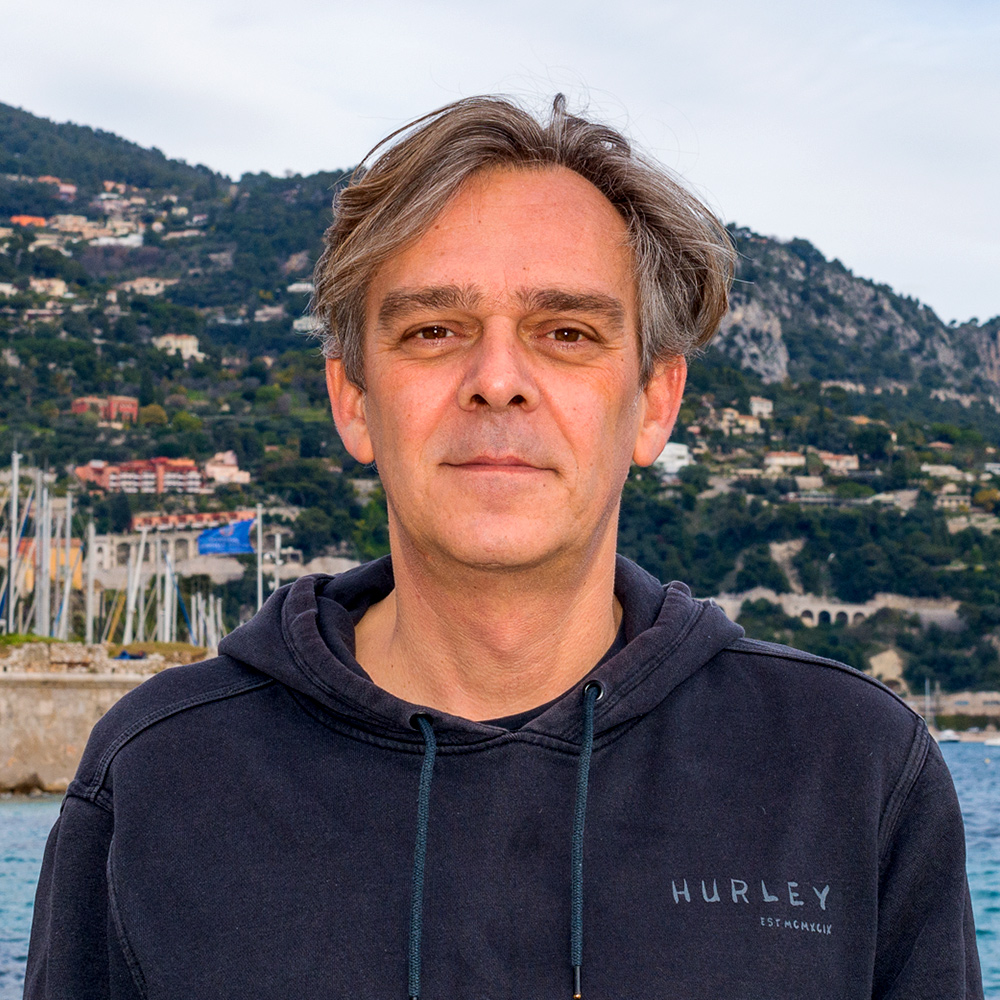
CONTACT : Thomas Jessin
- Caserne Nicolas (Corderie)
Engineer
@ OMTAB
Thomas Jessin
Current position :
Status :
Employer :
Team(s) :
Hosting Lab :
Keywords :
Complementary Information
Thomas Jessin is a webdesigner at LOV (CNRS/SORBONNE UNIVERSITE) since 2013. After obtaining a D.E.S.S. (Master2) “Image, Multimedia, et Sciences Territoriales” in 1997, he worked in several companies as a multimedia developer and digital cartographer, both as an employee and freelance.
Passionate about the Ocean, he approached l’Institut de la mer de Villefranche (IMEV) in 2011.
Since then, he designs, develops and maintains websites for laboratories and scientific projects : LOV, IMEV, BGC-Argo, REFINE, TONGA, remOcean, pH Biogeochemical-Argo, SOCLIM,… .
But also websites for Ocean Litteracy: adopt a float, Culture Ocean, Ocean Stories, mon océan & moi, 66° Sentinelles de l’Océan Polaire.
He produces digital content (videos, photos, sound, maps) and printed documents (graphic identity, posters, logos, leaflets, flyers, booklets) for outreach and science communication. He also works as a consultant in graphic design workshops for students and scientists, and he is heavily involved in the IMEV IT Commission as an expert in web technologies.
You are browsing one of the websites I have created ;-)
Curriculum
- 2021- present Webdesigner Engineer
- 2018-2020 - Webdesigner @my own company : Ocean Shape
- 2013-2018 - Webdesigner @ LOV (SORBONNE UNIVERSITE / CNRS)